
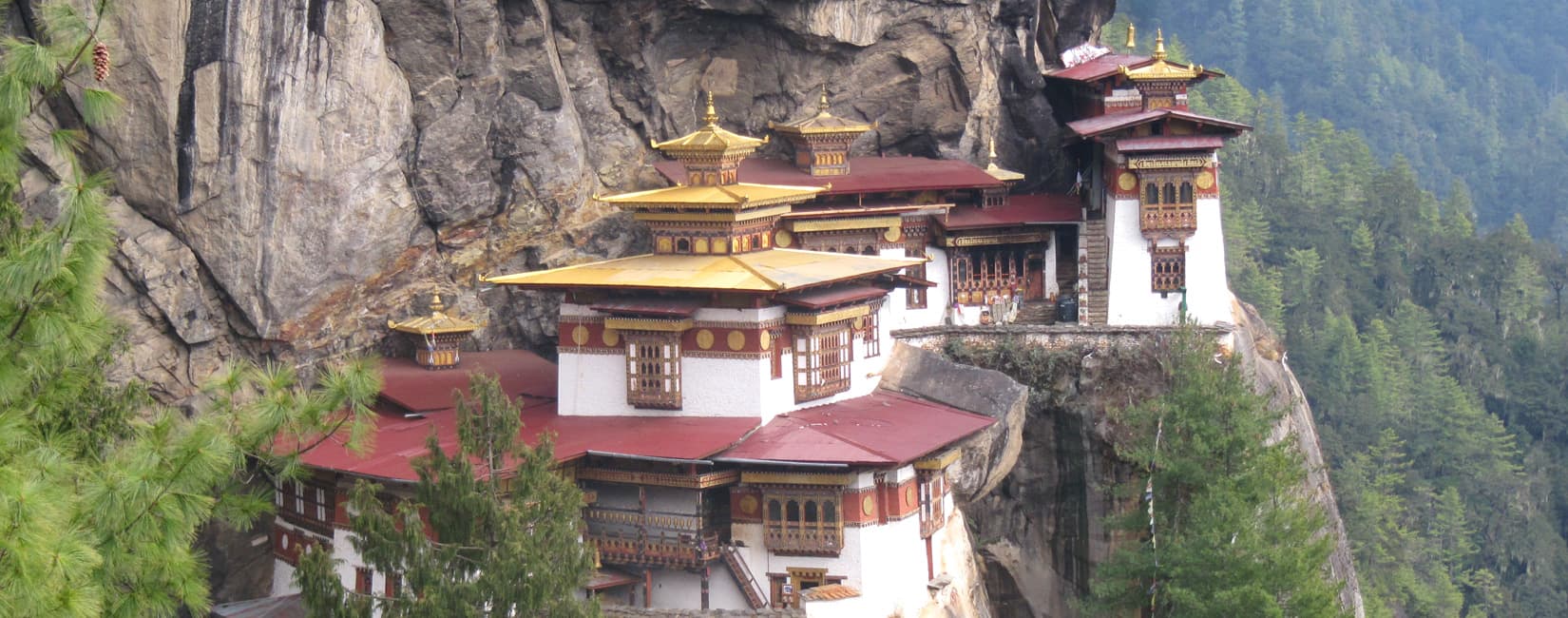
- Ascend to Paro Taktsang (Tiger's Nest): Complete the iconic mountain hike to the 8th-century cliffside monastery perched 900 meters above the valley floor.
- Explore Punakha Dzong: Walk the courtyards of Bhutan's most celebrated fortress at the confluence of the Pho Chhu and Mo Chhu rivers.
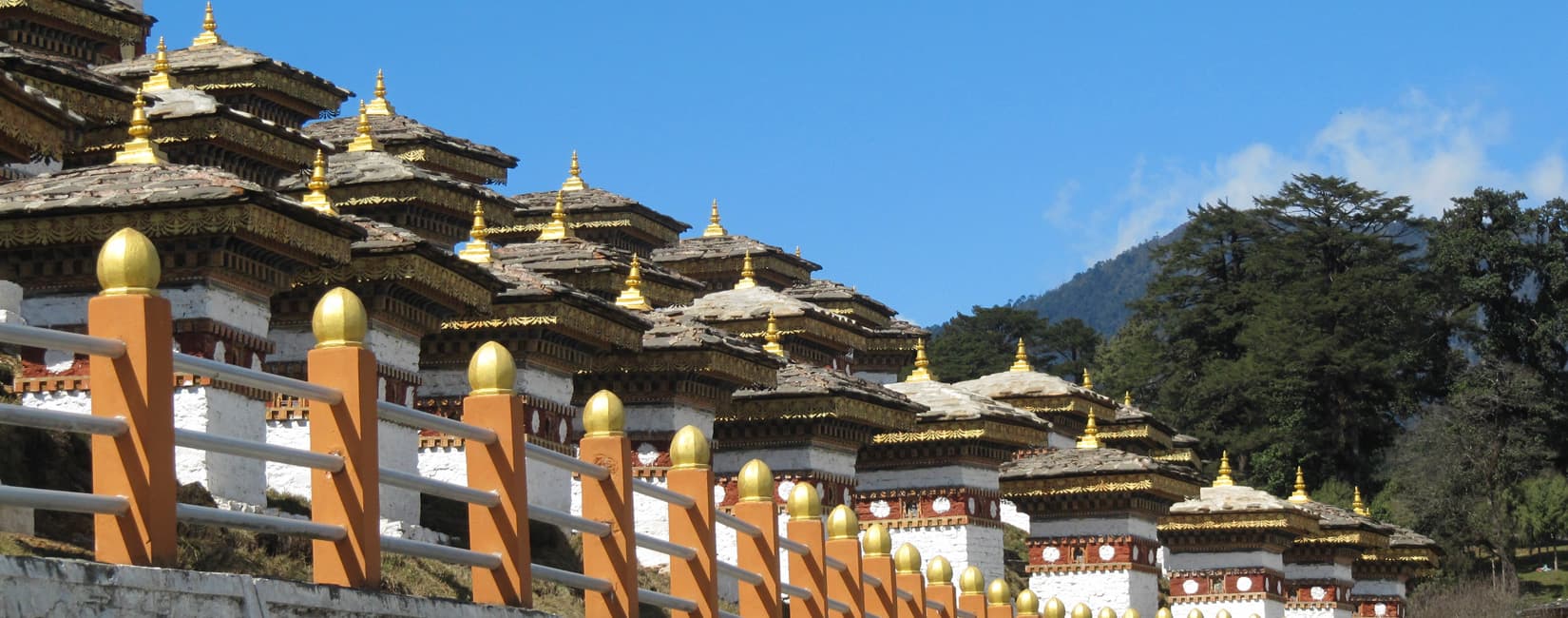
- Cross Dochula Pass (3,080 m): View the 108 memorial stupas and take in panoramic vistas of the eastern Himalayan mountain range.
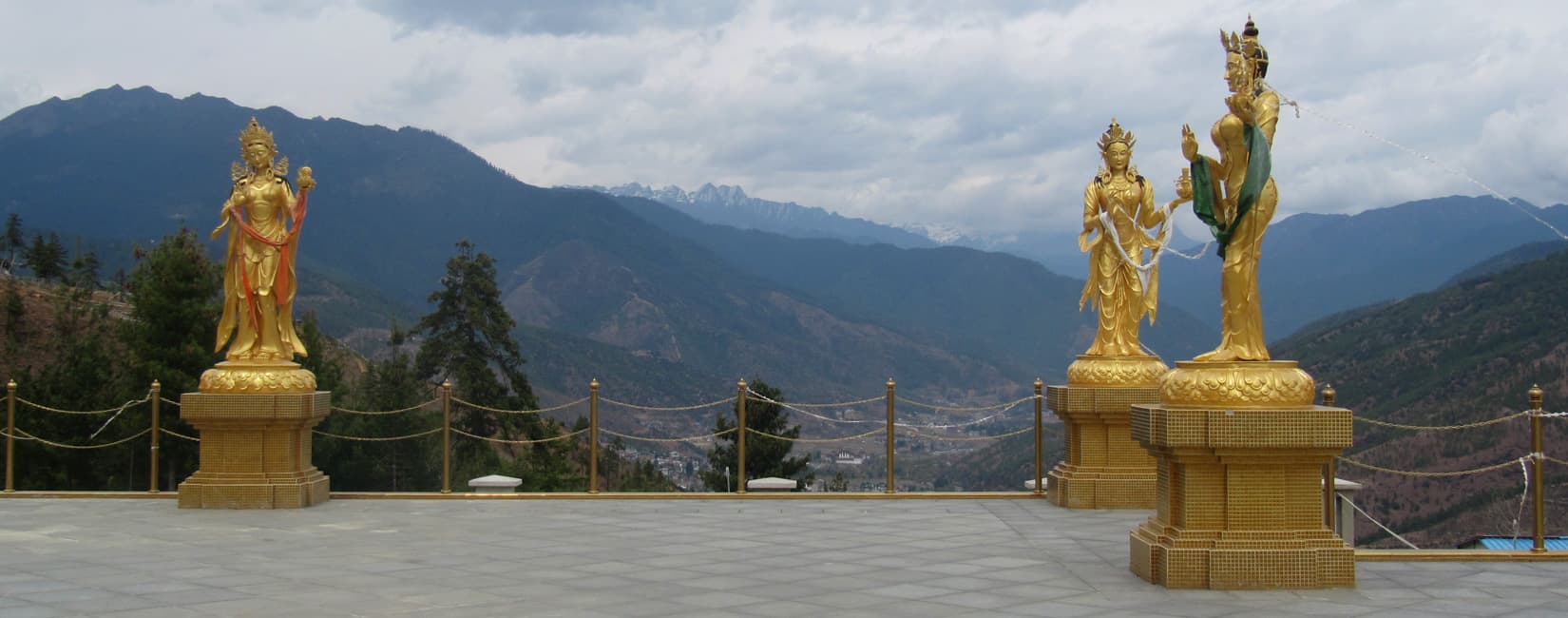
- Stand before Buddha Dordenma: Visit the 51.5-meter bronze Buddha statue overlooking the capital, housing 125,000 smaller gilded Buddhas.
- Walk to Chimi Lhakhang: Traverse agricultural terraces to the 15th-century temple dedicated to the teachings of Drukpa Kunley.
- Discover Ancient Dzong Architecture: Tour the 17th-century administrative and spiritual fortresses of Tashichho, Simtokha, and Rinpung.
7 Days Bhutan Golden Triangle Tour
- DestinationBhutan
- Duration7 Days
- GradeEasy
- ActivitiesTour
- AccommodationHotels
- Max. Elevation3120m.
- Group SizeMin. 1 Pax
- VehicleLand
- MealsB, L & D
- LanguageEnglish
Trip Highlight
7 Days Bhutan Golden Triangle Tour
Trail Details
Journey Through 7 Days Bhutan Golden Triangle Tour
The 7 Days Bhutan Golden Triangle Tour delivers an immersive journey across the cultural and natural heartland of the Kingdom of Bhutan. Spanning the fertile valleys of Thimphu, Punakha, and Paro, this seven-day itinerary introduces you to the heritage of Vajrayana Buddhism, pristine alpine landscapes, and architectural wonders. From the vibrant capital city of Thimphu to the sub-tropical river valleys of Punakha and the dramatic heights of Paro, travelers experience a living culture shaped by centuries of deliberate preservation and guided by the philosophy of Gross National Happiness.
Route Overview
The journey begins upon landing at Paro International Airport. From Paro, you travel eastward along the Pa Chhu and Wang Chhu river valleys to Thimphu, Bhutan’s capital. After comprehensive cultural exploration in Thimphu, the route crosses the high Himalayan pass of Dochula (3,080 m) before descending into the warm, sub-tropical Punakha Valley. After exploring Punakha's riverside dzongs and lush farmland, the route returns westward over Dochula to Paro for the iconic hike to Tiger’s Nest Monastery (Paro Taktsang) and surrounding historical monuments before your departure flight.
Peaks and sites seen during the trip
- Tamchog Lhakhang: A 15th-century private temple founded by the Tibetan saint Thangtong Gyalpo, builder of historic iron-chain suspension bridges across the Himalayas.
- Chuzom Confluence: The geographic junction of the Paro (Pa Chhu) and Thimphu (Wang Chhu) rivers, adorned by three distinct stupas built in Bhutanese, Tibetan, and Nepalese architectural styles.
- Thimphu Local Crafts Bazaar: An open-air market showcasing authentic Bhutanese hand-woven textiles, thangkas, wood carvings, and jewelry produced by local artisans.
- National Library of Bhutan: Established in 1967, this institution preserves priceless ancient Buddhist texts, xylographic woodblocks, and historical manuscripts.
- Institute for Zorig Chusum: The premier national painting school where students undergo six years of training in Bhutan’s 13 traditional arts and crafts.
- Textile Museum: A dedicated cultural center showcasing the weaving techniques, national dress (Gho and Kira), and royal textile collections of Bhutan.
- Buddha Dordenma (Kuensel Phodrang): A massive 51.5-meter bronze statue of Shakyamuni Buddha overlooking the Thimphu valley, housing over 125,000 smaller gilded Buddha statues inside.
- King's Memorial Chorten: A prominent landmark built in 1974 to honor the third Druk Gyalpo, Jigme Dorji Wangchuck, continuously circumambulated by local devotees.
- Tashichho Dzong: The majestic "Fortress of the Glorious Religion," serving as the seat of the national government, the King's throne room, and the summer residence of the Central Monastic Body.
- Dochula Pass (3,080 m) & Eastern Himalayan Peaks: A scenic mountain pass featuring 108 Druk Wangyal Chortens with panoramic views on clear days of snow-capped peaks including Gangkar Puensum (7,570 m), Masanggang, and Tsendagang.
- Punakha Dzong: Built in 1637 at the confluence of the Pho Chhu (father) and Mo Chhu (mother) rivers, this historic fortress served as Bhutan's administrative capital until 1955.
- Chimi Lhakhang: The 15th-century "Fertility Temple" established by Ngawang Chogyal and associated with the revered saint Drukpa Kunley, surrounded by the terraced rice fields of Sopsokha village.
- Khamsum Yuelley Namgyal Chorten: A four-story pagoda-style stupa built on a ridge above the Mo Chhu river, constructed to bring universal peace and protect the nation from negative forces.
- Sangchhen Dorji Lhuendrup Lhakhang Nunnery: A hilltop complex overlooking Punakha and Wangdue valleys housing a 14-foot bronze Avalokiteshvara statue and a higher education center for Buddhist nuns.
- Simtokha Dzong: Constructed in 1627 by Zhabdrung Ngawang Namgyal, this is the oldest surviving dzong in Bhutan, currently housing an institute for language and cultural studies.
- Ta Dzong (National Museum of Bhutan): A cylindrical 17th-century watchtower situated above Paro Dzong, housing an extensive collection of thangkas, weaponry, textiles, and natural history exhibits.
- Rinpung Dzong (Paro Dzong): The "Fortress of the Heap of Jewels," an architectural masterpiece featuring massive wooden galleries, courtyard murals, and administrative offices.
- Paro Taktsang (Tiger's Nest Monastery): Perched precariously on a sheer granite cliff 900 meters above the Paro Valley floor, marking the cave where Guru Padmasambhava meditated in the 8th century.
- Kyichu Lhakhang: One of the oldest temples in Bhutan, founded in the 7th century by Tibetan King Songtsen Gampo as one of 108 boundary-pinning temples across the Himalayas.
Table of Altitude & Highlights
|
Destination / Place |
Altitude (Meters / Feet) |
Major Highlight |
|
Paro Valley |
2,200 m / 7,218 ft |
Paro International Airport & historic Rinpung Dzong |
|
Thimphu City |
2,334 m / 7,657 ft |
51.5 m Buddha Dordenma & Tashichho Dzong |
|
Dochula Pass |
3,080 m / 10,105 ft |
108 Druk Wangyal Chortens & Himalayan panoramas |
|
Punakha Valley |
1,242 m / 4,075 ft |
17th-century Punakha Dzong at the river confluence |
|
Tiger's Nest (Taktsang) |
3,120 m / 10,236 ft |
Cliffside monastery hanging 900 m above the valley |
Table of Temperature
|
Location |
Metric |
Jan |
Feb |
Mar |
Apr |
May |
Jun |
Jul |
Aug |
Sep |
Oct |
Nov |
Dec |
|
Thimphu |
High(°C) Low (°C) |
12 -2 |
14 0 |
17 4 |
20 7 |
23 12 |
25 15 |
26 16 |
26 16 |
24 14 |
22 9 |
17 3 |
14 -1 |
|
Punakha |
High(°C) Low (°C) |
18 5 |
20 7 |
24 10 |
27 14 |
30 17 |
31 21 |
32 22 |
32 22 |
30 20 |
27 15 |
23 10 |
19 6 |
|
Paro |
High(°C) Low (°C) |
10 -3 |
12 -1 |
15 3 |
19 6 |
22 10 |
24 14 |
25 15 |
25 15 |
23 13 |
20 7 |
15 2 |
12 -2 |
|
Dochula Pass |
High(°C) Low (°C) |
6 -5 |
8 -3 |
11 0 |
14 3 |
16 7 |
18 10 |
19 11 |
19 11 |
17 9 |
14 4 |
10 -1 |
7 -4 |
Trip Alternatives
- 5-Days Bhutan Cultural Tour: A condensed itinerary focusing exclusively on the primary highlights of Thimphu and Paro, tailored for travelers with limited vacation schedules.
- 10-Days Bhutan Tour: An extended cultural journey that crosses major cities in Bhutan and the spiritual heartland of Bumthang.
- 8-Day Druk Path Trek & Cultural Package: A combined itinerary featuring 4 days of high-altitude alpine ridge trekking between Paro and Thimphu alongside core monastery visits.
Elevation Chart
Detailed Itinerary
7 Days Bhutan Golden Triangle Tour - 7 days
- Day 01
Arrive in Paro by Air & Transfer to Thimphu
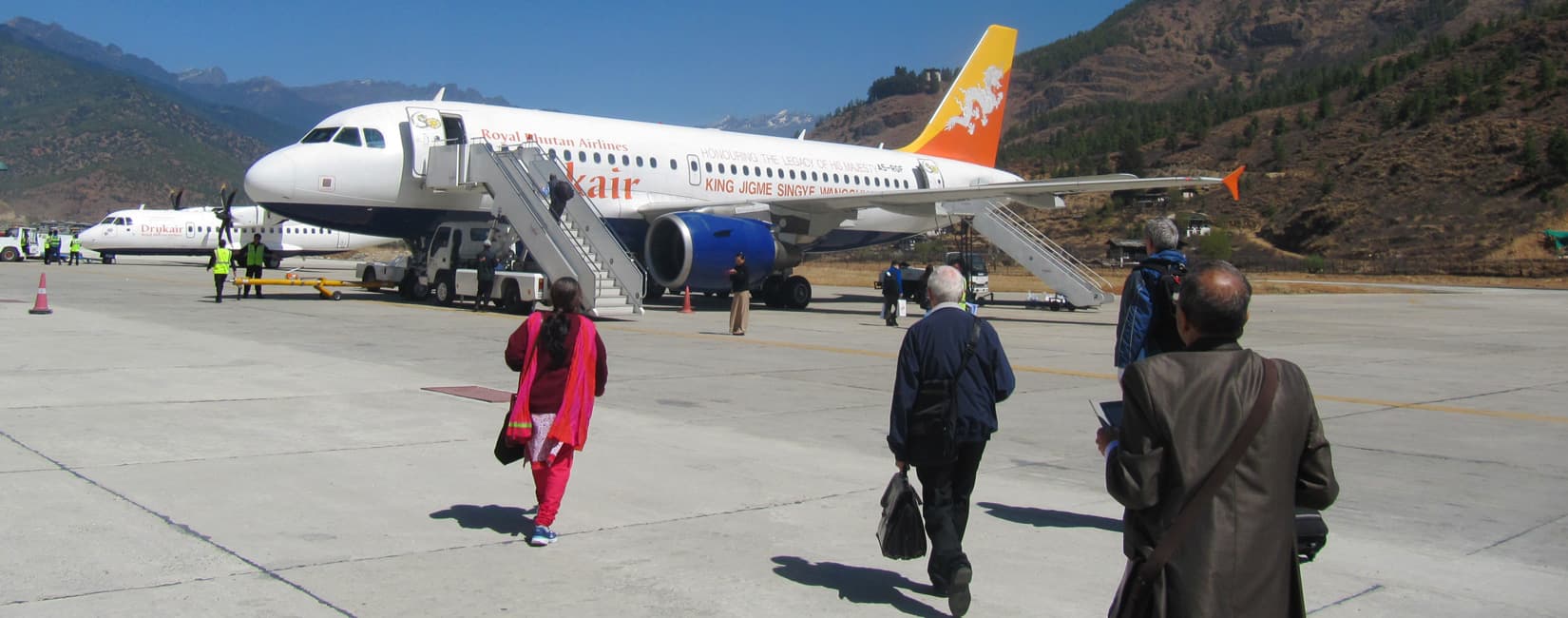
The flight into Paro International Airport offers views of the high Himalayan peaks, descending into the terraced valley of Paro. After clearing immigration formalities and receiving your official entry visa stamp, you will meet your Himalayan Planet Adventures guide and driver outside the terminal.
We begin our overland drive toward Thimphu, the capital city of Bhutan. Along the route, we pause at Chuzom, the scenic river confluence where the Paro and Thimphu rivers meet, distinguished by three large chortens built in traditional Bhutanese, Tibetan, and Nepalese architectural styles.
Just before this junction, view Tamchog Lhakhang across the river, a private temple built in the 15th century dedicated to the builder Thangtong Gyalpo. Upon reaching Thimphu, check into your hotel and take an evening walking tour along Norzin Lam and the Local Crafts Bazaar to view authentic hand-woven textiles, wood carvings, and thangka paintings.
- MealsDinner Included
- AccommodationHotel
- Travel Duration5 hours
- Travel Distance50 km
- RouteParo International Airport to Thimphu
- Transportationcar
- Elevation2,200 meters to 2,334 meters
- Day 02
Full-Day Cultural Sightseeing in Thimphu Valley
Following breakfast at your hotel, begin a comprehensive cultural exploration of Thimphu Valley. Our morning starts with a visit to the National Library, which houses an extensive repository of ancient Buddhist texts, manuscripts, and wooden printing blocks. Next, proceed to the National Institute for Zorig Chusum, where students complete rigorous training in Bhutan’s 13 traditional arts, including thangka painting, sculpture, and embroidery. We then visit the nearby Textile Museum to study the living tradition of weaving and royal ceremonial costumes.
After lunch at a local restaurant, drive to Kuensel Phodrang to stand before the towering 51.5-meter bronze Buddha Dordenma statue, which overlooks the southern entrance of the capital valley. Continue to the King's Memorial Chorten, a prominent landmark where local elders gather daily to chant mantras and circumambulate the whitewashed stupa. Conclude the day with a guided tour of Tashichho Dzong, the imposing fortress and monastery that houses the government secretariat, the King's official throne room, and the summer quarters of the Central Monastic Body.
- MealsBreakfast, Lunch, and Dinner Included
- AccommodationHotel
- Travel Duration5-6 hours
- Travel Distance25 km (Local valley transit)
- RouteThimphu to Thimphu
- Transportationcar
- Elevation2,334 meters to 2,334 meters
- Day 03
Drive from Thimphu to Punakha via Dochula Pass (3080m)
After breakfast, check out of your hotel and drive eastward toward the sub-tropical Punakha Valley. The highway ascends through pine and oak forests to Dochula Pass at an elevation of 3,080 meters. On clear days, this high ridge offers panoramic views of the snow-covered eastern Himalayan peaks along the Tibetan border, framed by 108 stone memorial chortens known as the Druk Wangyal Chortens.
Descend through changing vegetation zones into the warmer valley of Punakha. Check into your hotel, then proceed to the historic Punakha Dzong, situated at the confluence of the Pho Chhu and Mo Chhu rivers. Built in 1637, this fortress served as the country’s ancient capital and remains the winter seat of the Chief Abbot (Je Khenpo). Later in the afternoon, take a leisurely walking excursion across terraced rice paddies from Sopsokha village to Chimi Lhakhang, the 15th-century fertility monastery founded by Ngawang Chogyal. Return to your hotel for dinner.
- MealsBreakfast, Lunch, and Dinner Included
- AccommodationHotel
- Travel Duration3 hours
- Travel Distance75 km
- RouteThimphu to Punakha District
- Transportationcar
- Elevation2,334 meters to 1,242 meters
- Day 04
Explore Punakha Valley & Surrounding Monasteries
Spend the day discovering the upper reaches of the Punakha river valley. Following breakfast, begin a scenic morning hike along the banks of the Mo Chhu river, traversing fields of chilies, cabbages, and rice to reach Khamsum Yuelley Namgyal Chorten. This four-story monument was constructed by the Queen Mother to promote peace and harmony, offering views across the valley floor from its upper terrace.
After lunch at a local riverside restaurant, drive up to the ridge overlooking Punakha and Wangdue Phodrang to visit the Sangchhen Dorji Lhuendrup Lhakhang Nunnery. The complex features a 14-foot bronze statue of Avalokiteshvara crafted by local artisans, surrounded by statues of Guru Padmasambhava and the 21 Taras. Tour the grounds to learn about the nunnery's educational center, which provides religious studies and vocational training in tailoring and thangka painting for resident Buddhist nuns. Spend the late afternoon walking through Punakha village along the riverbank before dinner.
- MealsBreakfast, Lunch, and Dinner Included
- AccommodationHotel
- Travel Duration5-6 hours
- Travel Distance35 km (Local valley transit)
- RoutePunakha District to Punakha District
- Transportationcar
- Elevation1,242 meters to 1,242 meters
- Day 05
Drive from Punakha to Paro via Simtokha Dzong
Check out of your Punakha hotel after breakfast and begin the return drive westward across Dochula Pass toward Paro Valley. Along the way, we stop at Simtokha Dzong, built in 1627 by Zhabdrung Ngawang Namgyal. As the oldest fortified monastery in the Kingdom, Simtokha features prayer wheels, slate carvings depicting Buddhist deities, and an institute for the study of the Dzongkha language.
Arrive in Paro by early afternoon and check into your hotel. After lunch, visit Ta Dzong, a 17th-century circular watchtower that was converted in 1968 into the National Museum of Bhutan. The museum’s galleries showcase collections of ancient weaponry, ceremonial masks, festival costumes, and natural history specimens. From Ta Dzong, walk down the hillside stone path to Rinpung Dzong ("Fortress of the Heap of Jewels"). Explore its central courtyard and open galleries adorned with detailed frescoes depicting the Wheel of Life and the life of the yogi Milarepa before returning to your hotel for the evening.
- MealsBreakfast, Lunch, and Dinner Included
- AccommodationHotel
- Travel Duration4 hours
- Travel Distance125 km
- RoutePunakha District to Paro District
- Transportationcar
- Elevation1,242 meters to 2,200 meters
- Day 06
Hike to Paro Taktsang (Tiger’s Nest: 3120m) & Visit Kyichu Lhakhang
Dedicate the morning to the hike up to Paro Taktsang, widely known as the Tiger’s Nest Monastery. The trail winds upward through blue pine and rhododendron forests, climbing approximately 500 vertical meters above the valley. You will pause for tea and views at the midway cafeteria before continuing along the cliffside path directly opposite the monastery. Cross the waterfall bridge to enter the complex, where Guru Padmasambhava is believed to have meditated in the 8th century after flying to the site on the back of a tigress.
Explore the monastery's inner shrine rooms and caves with your guide before descending back down the mountain trail to the valley floor for a late lunch. In the late afternoon, drive north of Paro to visit Kyichu Lhakhang, a 7th-century sanctuary established by Tibetan King Songtsen Gampo. Kyichu is one of the oldest and most sacred temples in Bhutan, marking the introduction of Buddhism to the region. Return to your hotel in Paro for your farewell dinner.
- MealsBreakfast, Lunch, and Dinner Included
- AccommodationHotel
- Travel Duration45 minutes driving (plus 4.5 to 5 hours hiking)
- Travel Distance30 km (Valley transit and trailhead transfer)
- RouteParo District to Paro District
- Transportationcar
- Elevation2,200 meters to 2,200 meters
- Day 07
Departure Day
Enjoy an early breakfast at your hotel before checking out. Your private driver and tour guide will provide transport to Paro International Airport (PBH) in alignment with your flight schedule. Your guide will assist you with luggage handling and terminal check-in procedures before bidding you farewell for your onward flight across the Himalayas.
- MealsBreakfast Included
- Travel Duration15 min.
- Travel Distance5 km
- RouteParo District to Paro International Airport
- Transportationcar
- Elevation2,200 meters
If the provided schedule isn't suitable for you, we can create personalized travel arrangements.
Customize My TripTrekking Guide
Everything you need to know
Trip Grades
This tour is classified as Easy to Moderate. The majority of sightseeing involves vehicle transit, flat city walks, and gentle steps within dzongs and temples. The only physically demanding section is the Day 6 hike to Tiger's Nest Monastery, which involves an elevation gain of approximately 500 meters over a 4 to 5 hour roundtrip mountain trail.
Physical Requirement and Health
Participants should possess general physical mobility and be comfortable walking 2 to 4 miles daily on uneven stone steps, dirt paths, and gentle inclines. No technical mountaineering skills are required. Travelers with pre-existing cardiovascular, respiratory, or joint conditions should consult their physician prior to booking.
Training program
For travelers unaccustomed to mountain walking, we recommend starting a basic cardiovascular routine 3 to 4 weeks prior to departure. Focus on 30 minutes of brisk walking, stair climbing, or stationary cycling 3 times per week to prepare your leg muscles and lungs for the Tiger's Nest ascent.
Age Limit
There is no statutory age limit for this cultural tour. It is well-suited for families with children aged 6 and above as well as active seniors up to 75+ years who can manage light mountain walking and stair climbs independently.
Group size
- Minimum Group Size: 1 person (Private individual departures).
- Maximum Group Size: 25 persons per group to maintain personalized guide interaction, smooth logistics, and comfortable vehicle seating.
Best time to visit
- Spring (March to May): Prime season. Daytime temperatures range from 17°C to 23°C. Wild rhododendrons and magnolias bloom across the mountain passes, with crystal clear morning skies.
- Autumn (September to November): Peak travel period. Mild temperatures (15°C to 22°C), low precipitation, and exceptional visibility for viewing Himalayan peaks. Major religious festivals (Tshechus) take place during this window.
- Winter (December to February): Dry and sunny with cool days (10°C to 14°C) and crisp nights dropping below freezing (-3°C to 0°C). Excellent mountain views and fewer tourists.
- Monsoon (June to August): Characterized by periodic afternoon showers, lush green valley scenery, and temperatures reaching 26°C to 30°C. Mountain passes may experience cloud cover.
Visa Information
All foreign nationals (except citizens of India, Bangladesh, and Maldives holding valid documentation) require an entry visa for Bhutan. Himalayan Planet Adventures processes your official electronic visa clearance directly with the Department of Immigration in Thimphu upon receipt of full tour payment and a clear passport copy (valid for at least 6 months past your travel dates). Your physical visa is stamped into your passport upon arrival at Paro Airport.
Necessary Permits
Special route permits are legally required to travel between districts (e.g., crossing from Thimphu to Punakha via Dochula Pass) and to enter specific monastery sanctums. All required regional and monument entry permits are secured in advance by our operations team and managed directly by your assigned tour guide.
Insurance details
Comprehensive travel insurance covering trip cancellation, medical emergencies, hospital stays, and high-altitude evacuation (up to 3,500 meters) is mandatory for entering Bhutan. Recommended international insurance providers include:
- North America: World Nomads, Allianz Global Assistance, Travel Guard.
- United Kingdom & Europe: Cover-More, AXA Travel Insurance, Post Office UK.
- Australia & New Zealand: 1Cover, Southern Cross Travel Insurance, Medibank.
Transportation and/or Domestic Flight
All ground transportation is operated via private, licensed tourist vehicles driven by professional mountain drivers:
- 1–2 Travelers: 4WD SUV (Toyota Prado or similar).
- 3–4 Travelers: Hyundai H1 Luxury Minivan.
- 5–8 Travelers: Toyota HiAce High-Roof Van.
- 9–16 Travelers: Toyota Coaster Mini-Bus.
International access flights to Paro International Airport (PBH) operate via Bhutan's national carriers (Drukair and Bhutan Airlines) from gateway hubs including Kathmandu (KTM), Bangkok (BKK), New Delhi (DEL), Kolkata (CCU), and Singapore (SIN).
Packaging and Luggage Information
Airlines flying into Paro strictly enforce checked luggage limits of 30 kg (66 lbs) for Economy and 40 kg (88 lbs) for Business class, plus 7 kg (15 lbs) for cabin carry-on. Pack clothing in versatile layers: moisture-wicking base layers, fleece mid-layers, an insulated jacket, sturdy broken-in walking shoes or hiking boots, UV-blocking sunglasses, and modest long-sleeve shirts/trousers required for temple visits.
Accommodation, meals, and water
- Hotels: Handpicked 3-star, 4-star, or 5-star properties offering private en-suite bathrooms, heating, and traditional Bhutanese architectural aesthetics.
- Meals: Full board is included. Breakfasts and dinners are served at your hotel, featuring a mix of Continental, Indian, and traditional Bhutanese dishes (such as Ema Datshi—chili and cheese). Lunches are provided at vetted tourist restaurants during day excursions.
- Water: Sealed mineral water bottles are provided daily in your tour vehicle. We discourage drinking untreated tap water.
Hotel Envisaged for (3 star):
|
Designation |
Hotel |
No. of Nights |
|
Thimphu |
Thimphu Central Hotel/ Drugyel Twin Tower/ Similar |
02 |
|
Punakha |
Hotel Lobesa/ Zhingkham Resort/ Similar |
02 |
|
Paro |
Metta Resort/ Similar |
02 |
Hotel Envisaged for (4 star):
|
Designation |
Hotel |
No. of Nights |
|
Thimphu |
The Capital Hotel/ Hotel Ariya/ Similar |
02 |
|
Punakha |
Lobesa Boutique/ Similar |
02 |
|
Paro |
Tashi Namgay Resort/ Kachi Grand/ Similar |
02 |
Hotel Envisaged for (5 star):
|
Designation |
Hotel |
Room Category |
No. of Nights |
|
Thimphu |
Le Meridian |
Classic |
02 |
|
Punakha |
Densa Boutique |
Suite |
02 |
|
Paro |
Le Meridian |
Classic |
02 |
Altitude Information, Acclimatization, and AMS safety
Altitudes on this itinerary range from 1,242 meters (Punakha) to 3,120 meters (Tiger's Nest Monastery). Because you spend your first two nights in Thimphu (2,334 m) and descend to Punakha (1,242 m) before returning to Paro, your body naturally acclimates to the moderate elevations. Acute Mountain Sickness (AMS) is rare on this route, but staying hydrated and moderating alcohol consumption is recommended.
Internet and Phone connectivity
All hotels provide complimentary Wi-Fi in rooms and common areas. Mobile network coverage across Thimphu, Punakha, and Paro is reliable. You can purchase a local prepaid tourist 4G/5G SIM card (from providers TashiCell or B-Mobile) at Paro Airport upon arrival for approximately USD 10 to USD 15.
Currencies acceptable and to use
The local currency is the Bhutanese Ngultrum (BTN), which is pegged 1:1 to the Indian Rupee (INR). Indian Rupee banknotes in denominations of ₹100 and ₹500 are widely accepted across Bhutan. Major credit cards (Visa and MasterCard) are accepted at high-end hotels and select craft emporiums, though carrying cash (USD or BTN) is necessary for small local purchases and tipping.
Tipping Guidelines
Tipping is not legally mandatory in Bhutan but is customary and appreciated in the tourism sector. As an industry guideline, budget approximately USD 10 to USD 15 per day for your lead guide and USD 7 to USD 10 per day for your driver, presented in an envelope at the conclusion of your tour.
Area Guidelines
Bhutan maintains strict preservation of its natural environment and cultural heritage. Always walk clockwise around chortens, stupas, and mani prayer walls. Do not litter, avoid disturbing wildlife, and refrain from purchasing antique relics, which is strictly prohibited by law.
Photography guidelines and cultural sensitivity
Photography and filming are permitted in the public courtyards of dzongs, town streets, and outdoor viewpoints. However, photography is strictly forbidden inside the inner sanctums and altar rooms of temples and monasteries. Always ask for permission before photographing local monks or residents. Modest attire covering shoulders, arms, and knees is required when entering religious buildings.
How to Book this trip
- Submit an Inquiry: Contact Himalayan Planet Adventures with your preferred departure dates, group size, and hotel tier preference.
- Review Itinerary & Quote: Our travel specialists will provide a confirmed quote and flight options to Paro.
- Confirm & Deposit: Submit a passport copy (minimum 6 months validity) and a 30% tour deposit (non-refundable).
- Visa Processing: We handle your official visa approval, flight bookings, and district permits.
- Final Payment: Pay the remaining balance 30 days prior to departure, receive your official e-visa clearance, and prepare for your flight to Paro.
Trip FAQs
Is it safe for me to travel as a solo female in Bhutan?
Yes, absolutely. Bhutan is consistently ranked as one of the safest travel destinations in the world. Violent crime is exceptionally rare, and our female travelers are accompanied by licensed, vetted professional guides and drivers who ensure your security, privacy, and comfort at every step of the journey.
Do I need to be in peak athletic shape to hike to Tiger's Nest?
Not at all. The trail is well-maintained and completed at your own pace. Most travelers reach the monastery within 2.5 to 3 hours of steady walking, with an optional rest stop at the midpoint cafeteria.
Will I suffer from altitude sickness on this 7-day tour?
It is very unlikely. The highest sleeping elevation is Thimphu at 2,334 meters (7,657 ft), which is well below the threshold where severe altitude sickness typically occurs. Our itinerary is carefully sequenced to ensure natural acclimatization.
What is the dress code when visiting monasteries and dzongs?
You will need long trousers or long skirts, shirts with sleeves (no tank tops), and a collared shirt or jacket. Hats and shoes must be removed before stepping into temple sanctuaries.
How does the daily Bhutan Sustainable Development Fee (SDF) work?
The daily SDF (USD 100 per person per night) is a government-mandated tourism levy that funds free healthcare, education, and ecological conservation across Bhutan. We include this fee directly in your package price.
Can I easily exchange currency or use ATMs in Bhutan?
Yes. You can exchange US Dollars, Euros, and British Pounds at Paro Airport or local banks in Thimphu and Paro. ATMs are available in major towns, though carrying crisp cash US Dollars or Indian Rupees is recommended as a reliable backup.
Customer's words
Traveller Review
Beautiful experience in Nagarkot
Watching the sunrise at Nagarkot was absolutely breathtaking, and our guide made the trek smooth and informative. During the journey, we were able to enjoy the charming villages, stunning natural scenery, and beautiful temples along the way. Our guide was very knowledgeable about Nepal’s culture, nature, and temples, and was attentive and professional throughout the trek.
The transportation and overall organization were reliable, ensuring a comfortable and enjoyable experience.
Overall, it was a well-organized and memorable trek, and I highly recommend their guiding services.30th Dec, 2025 A Perfect Nepal Experience with Himalaya Planet Adventure & the Amazing Guide Ananta🌹
From the very early planning stages , Himalaya Planet Adventure showed incredible professionalism, flexibility, and communication
My guide, Ananta. From the moment I was picked up at the airport, Ananta made me feel like I was traveling with friend— always punctual, full of positive energy, and incredibly knowledgeable about every place we visited. In just a short amount of time, we were able to explore so much of Kathmandu thanks to the smart planning and flexibility. From the breathtaking Chandragiri Hills cable car ride to the Swayambhunath (Monkey Temple), the majestic Boudhanath Stupa, the sacred Pashupatinath Temple, a unique visit to a Kashmiri mosque, and the vibrant squares of Kathmandu Durbar Square, everything was seamless.
To top it all off, we had a wonderful cultural dinner at Gokarna House, complete with live performances
Thank you again to the entire Himalaya Planet Adventure head and team for such an unforgettable journey. I highly recommend this company to anyone visiting Nepal — whether for a day or a week, they will maximize your experience with care, professionalism, and heart.
Sherif, Egypt — Tour in April 2025
13th Apr, 2025 Superb
Stunning and breathtaking , awesome view of the Himalayas, This had been my dream to see Mt. Everest from close quarters. I believe Moutain has always inspired me to be strong , bold , and stand tall amidst crisis. The snow clad mountain ranges was looking as though someone had painted in a canvas . I wish I could actually set my foot on them , walk up to the top and say Ahoy I have arrived .
1st Jul, 2023 Gokyo Trekking
We had a wonderful time in Nepal. Himalayan Planet and our guide Hari were top organised from the airport pickup to the return flight.
Our adventure started with Hari and our porter via the airport Ramechhap (flights from Kathmandu are cancelled increasingly). Hari was always worried about our well-being and tour changes and wishes were accepted without discussion. The selected teahouses were quite good according to the local standard. The food served in the teahouses was always very good (we only had veggie food ).
Himalayan Planet surprised us with a direct helicopter flight from Lukla to Kathmandu after we had arrived in Lukla two days earlier than planned. We heard later that this was the last flight for two days out of Lukla due to the misty weather.
We can highly recommend Hari as a tour guide. He is funny, knows the Everest area very well and is extremely adaptable and kind.
We thank Himalayan Planet for the great organisation and would like to recommend them warmly.
Julia and Miri
19th Dec, 2022 Simply amazing!
Roshan is a very thoughtful, knowledgeable and flexible guide. He has accommodated all of our requests and made our experience memorable. I would definitely book with Roshan again next time I'm back in Kathmandu for tours.
31st Dec, 2021