Climbing Grades
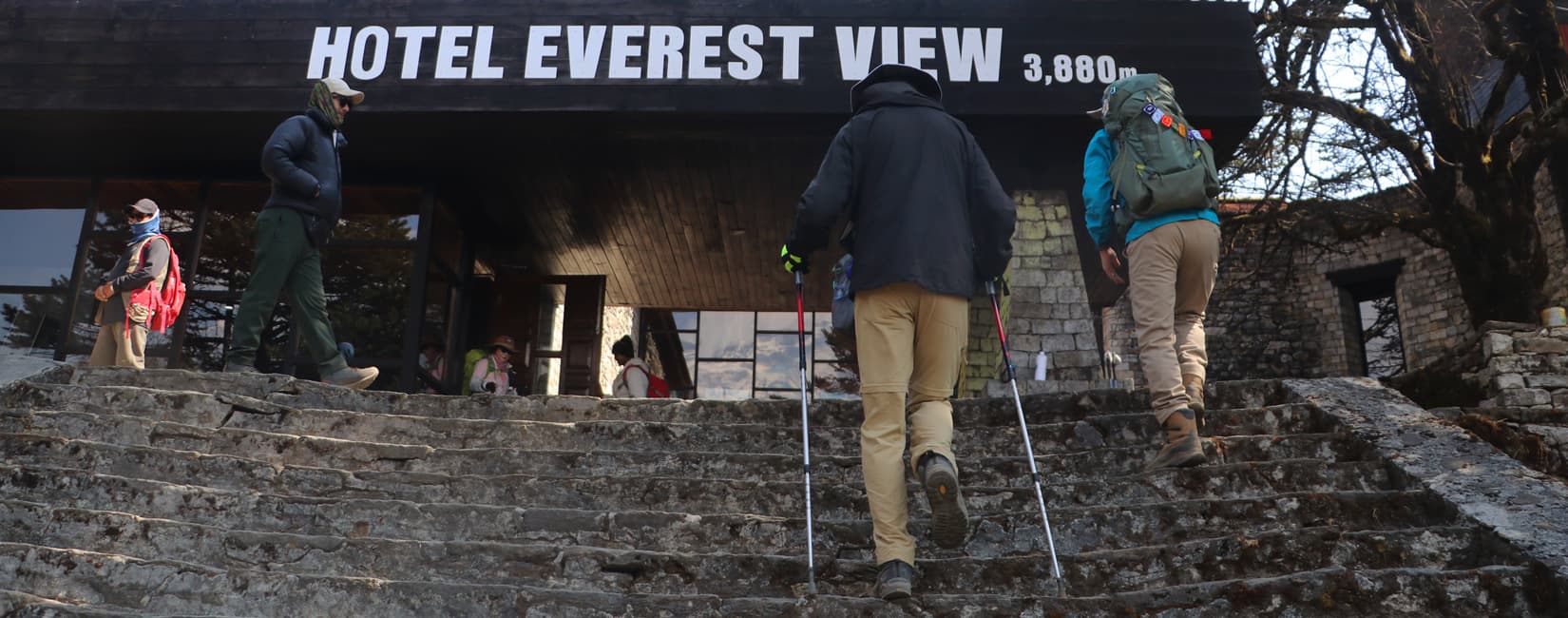
This is a Grade 3 (Moderate) trekking itinerary. It does not require technical climbing skills, ropes, or mountaineering equipment. The paths are well-defined, though they include steep ascents, stone staircases, and high-wire suspension bridges. The main challenge is the altitude, reaching a maximum elevation of 3,880m at Syangboche.
Physical Requirement and Health
Travelers should be in good physical condition and capable of walking 4 to 6 hours a day with a light daypack. Cardiovascular endurance and strong leg muscles are essential for the steep uphill sections. If you have pre-existing heart, lung, or joint conditions, consult your physician before booking.
Training program
Start training 8 to 12 weeks prior to arrival. Focus on cardiovascular workouts like hiking, running, cycling, or swimming for 45-60 minutes, 3-4 times a week. Incorporate stair climbing or walking on an inclined treadmill while wearing a weighted backpack to simulate trail conditions.
Age Limit
We recommend a minimum age of 10 years for children due to the altitude and walking demands. There is no strict upper age limit, provided the traveler is physically fit, medically cleared by a doctor, and comfortable walking on uneven terrain.
Group size (Min. to Max.) for best experience
To ensure personalized attention and optimal safety, we operate with a minimum of 1 person and a maximum of 4 people per group. Smaller group sizes allow our guides to monitor each individual's acclimatization progress closely and guarantee a premium experience at the luxury lodges.
Best time to visit and weather conditions
Spring (March, April, May) offers blooming rhododendrons and warmer days (10°C to 15°C at trekking altitudes). Autumn (September, October, November) provides the clearest skies, stable weather, and sharp mountain views, though temperatures drop significantly at night. Winter (December, January, February) is bitterly cold, while the Monsoon (June, July, August) brings heavy rain and obscured views.
Visa Information
Most foreign nationals can obtain a tourist visa upon arrival at Tribhuvan International Airport in Kathmandu. You will need a passport valid for at least six months beyond your arrival date, a passport-sized photograph, and the visa fee in cash (USD, EUR, or GBP).
For more information, please check out the Nepal government website at https://www.immigration.gov.np
Necessary Permits
All trekkers require the Sagarmatha National Park Entry Permit and the Khumbu Pasang Lhamu Rural Municipality Entrance Fee. For Foreign nationals, the combined cost is approximately USD 50. Indian and SAARC nationals receive a subsidized rate for the National Park permit. Nepali nationals pay a minimal fee for the park. Our team at Himalayan Planet Adventures handles all permit acquisitions on your behalf.
Insurance details
Comprehensive travel insurance is strictly mandatory. Your policy must explicitly cover trekking up to 4,000 meters and include emergency medical evacuation by helicopter. Travelers from the USA often use Global Rescue or World Nomads. UK and European citizens frequently rely on Campbell Irvine or True Traveller. Australian and New Zealand nationals can purchase suitable policies through Cover-More or Fast Cover.
Transportation and/or Domestic Flight
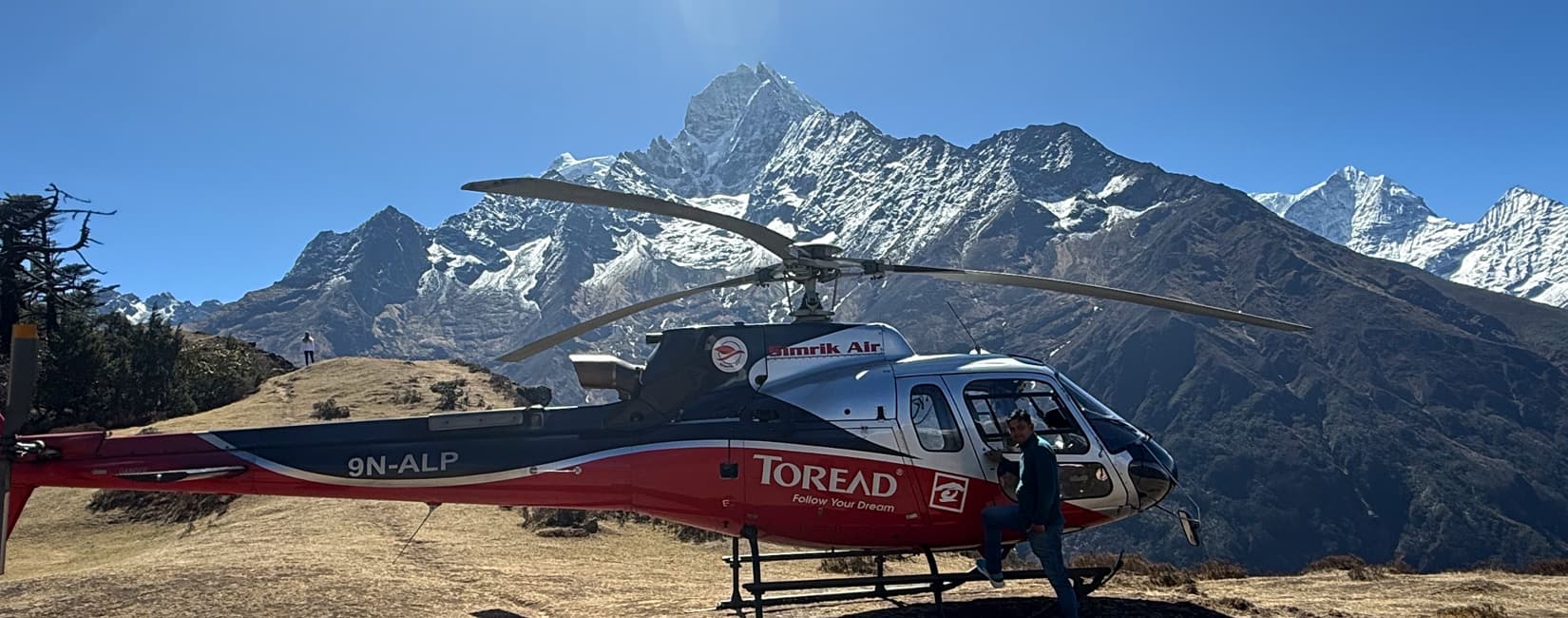
Ground transportation in Kathmandu utilizes private, air-conditioned vehicles. The transit to and from the Everest region is conducted via private chartered helicopters (Kathmandu to Lukla, and Tengboche back to Kathmandu). This ensures a scenic, safe, and highly reliable transit experience, completely avoiding the frequent delays of standard Lukla flights.
Packaging and Luggage Information
Pack in layers to accommodate fluctuating temperatures. You will need a high-quality down jacket, thermal baselayers, trekking pants, and a waterproof shell. We provide a company duffel bag for your main gear, which will be carried by porters. The weight limit for the helicopter and porters is strictly 12/13kg per person (including your daypack).
Porter service and guidelines
We provide one strong, experienced Sherpa porter for every two trekkers. The porter will carry your main duffel bag (maximum 15kg combined per porter) from lodge to lodge. You are only responsible for carrying your personal daypack with daily essentials like water, sunscreen, and a camera.
Accommodation, meals, and water during the trip
In Kathmandu, you will stay at the 5-star Dwarika's Hotel. On the trail, accommodations are in premium luxury lodges featuring en-suite bathrooms and heated beds where available. All meals (Breakfast, Lunch, Dinner) are included during the trek. We provide boiled, safe drinking water at the lodges; please bring a reusable water bottle to reduce plastic waste.
Altitude Information, Acclimatization, and AMS safety
Acute Mountain Sickness (AMS) is a severe risk when ascending above 2,500 meters. Our itinerary is carefully paced, and the altitude is slow with acclimatization in Everest View Hotel. Symptoms of AMS include headache, nausea, dizziness, and fatigue. Our guides monitor oxygen saturation daily and carry comprehensive first aid kits.
Internet and Phone connectivity
Wi-Fi is available at all luxury lodges on this route, though the connection speed can be affected by weather. You can purchase a local Ncell or NTC SIM card in Kathmandu for 4G data coverage, which works reliably up to Namche Bazaar and intermittently higher up.
Currencies acceptable and to use
The local currency is the Nepalese Rupee (NPR). While USD is accepted in some areas, it is highly recommended to exchange money in Kathmandu before the trek. You will need NPR for small personal purchases, tips, and extra snacks on the trail.
Tipping Guidelines
Tipping is a customary way to express gratitude to your trekking crew. A general standard is 10% to 15% of your total trip cost, to be pooled and distributed among your guide and porters on the final day of the trek.
Area Guidelines
Sagarmatha National Park is a protected ecological zone. Do not leave any trash on the trail, respect wildlife, and stay on marked paths. Purchasing items made from endangered species is strictly illegal.
Photography guidelines and cultural sensitivity
The Khumbu region is deeply rooted in Tibetan Buddhism. Always walk clockwise around Mani walls, stupas, and chortens. Ask for permission before taking close-up photographs of local residents or inside monasteries. Dress modestly, keeping shoulders and knees covered in religious sites.
How to Book Your Trek
- Check Our Website: Visit our website to see available departure dates and the current status of each trek.
- Contact Us: Reach out via email or phone to confirm date availability for your group size and to ask any questions.
- Book your Spot: After reading our booking terms, please send us a 20% advance deposit per person via bank transfer.
- Confirmation & Final Payment: Your booking is confirmed once we receive your signed form and deposit. We will send you an invoice for the final balance. The remaining 80% is due upon your arrival in Kathmandu and can be paid in cash or by credit card.