The Everest Base Camp Trek should be regarded as a challenging, but attainable high-altitude trek that requires a moderate level of fitness, along with time to acclimatize. Technical climbing skills are not required to trek to Everest Base Camp, but you should be prepared for long days of walking up and down, uneven terrain, cold weather, variable climates, and the physiological and psychological effects of altitude.
The trail normally involves a round-trip trek from Lukla covering a total of 12–14 trekking days depending on the itinerary and acclimatization schedules. The Everest base camp offers the hikers a view of the summit from around 5,364 meters (17,598 ft) while Kala Patthar peak provides an insight at around 5,545 meters (18,192 ft) above sea level. According to the Nepal Tourism Board, it is advisable to acclimatize properly since the altitude rises drastically in the Everest region.
Everest Base Camp Trek Difficulty at a Glance
|
Factor |
What to Expect |
|
Overall difficulty |
Moderate to challenging |
|
Trek duration |
Usually 12–14 trekking days |
|
Starting point |
Lukla, around 2,850 m |
|
Everest Base Camp altitude |
Approximately 5,364 m |
|
Highest point |
Kala Patthar, approximately 5,545 m |
|
Daily walking |
Generally 5–8 hours |
|
Technical climbing |
Not required for the standard EBC trek |
|
Main challenge |
High altitude and endurance |
|
Accommodation |
Tea houses/lodges |
|
Best preparation |
Cardiovascular fitness, strength and walking practice |
Is the Everest Base Camp Trek Really Difficult?
The challenge in the Everest Base Camp Trek is less steep climbs and more about altitude, stamina, terrain, and distance.
The most common route does not involve climbing via ropes and ice axes, but rather trekking at heights of over 3,000 meters for several days before reaching the camp at over 5,000 meters. The air becomes so thin at times that even walking can be extremely hard work.
On top of that, the trail is undulating and consists of numerous ups and downs. It is very easy to underestimate how much a trek of this length and altitude will tax you – especially on bad weather days and when the trail becomes rocky, involves crossing suspension bridges and navigating the Himalayas’ notorious bad weather.
According to the Nepal Tourism Board, hiking the Everest route is a demanding adventure through deep gorges, glaciers and lofty ridges with a gradual acclimatization to altitude.
What Makes the EBC Trek Difficult?
There are five major factors:
- High altitude
- Long walking days
- Steep and uneven terrain
- Cold and unpredictable mountain weather
- Altitude acclimatization
Of these, altitude is usually the biggest concern.
Everest Base Camp Trek Distance
The distance of the Lukla-Everest Base Camp hike varies depending on the trail and itinerary.
A Lukla -> Everest base camp -> Lukla trek usually involves around 120-130 km of walking trails with some variation based on side trips and stays.
The trail usually traverses through Phakding, Namche Bazaar, Tengboche, Dingboche or Pheriche, Lobuche and Gorak Shep before reaching the Everest base camp.
According to Nepal Tourism Board, The classic trek to Everest base camp starts in Lukla and goes through the Dudh Koshi Valley to Namche Bazaar, then on to Tengboche, Pheriche/Dingboche, Lobuche and Gorak Shep on to the Everest base camp.
Typical EBC Trek Route
Lukla → Phakding → Namche Bazaar → Tengboche → Dingboche/Pheriche → Lobuche → Gorak Shep → Everest Base Camp → Kala Patthar → return to Lukla
The return journey is generally faster because you are descending, although downhill walking can still be demanding on the knees and legs.
Everest Base Camp Trek Altitude
Altitude is what separates the Everest Base Camp Trek from many ordinary hiking trips.
|
Location |
Approx. Elevation |
|
Lukla |
2,850 m |
|
Namche Bazaar |
3,500 m |
|
Tengboche |
3,860 m |
|
Dingboche |
4,410 m |
|
Lobuche |
4,910 m |
|
Gorak Shep |
5,164 m |
|
Everest Base Camp |
5,364 m |
|
Kala Patthar |
5,545 m |
You start in Lukla, which is about 2850 meters above sea level, and you hike up to Everest Base Camp, which is about 5364 meters above sea level. It can vary slightly depending on your source or location. Nepal Tourism Board lists Lukla as being approximately 2850 m, Namche as 3500 m and Kala Patthar as 5545 m.
Why Is Altitude Such a Big Challenge?
Itinerary For Everest Base Camp Climbing
There is less oxygen in the air the higher you go up the mountain than there is at sea level. Your body has to adjust to the sudden drop of oxygen. This is known as acclimatization.
Acclimatization is one of the most crucial elements of the Everest Base Camp Trek. Most trekking itineraries are designed to allow for a few acclimatization days in places like Namche Bazaar and Dingboche.
These days should not be spent resting. Instead, you should try to do short hikes to higher altitudes to get your body used to it before heading back down. In fact, according to Nepal Tourism Board, an extra day should be spent around Namche Bazaar area for acclimatization, and there is also another acclimatization day planned around Dingboche/Pheriche area before heading higher.
Everest Base Camp Trek for Beginners: Is It Possible?
Yes, beginners can complete the Everest Base Camp Trek, provided they are physically prepared and follow a sensible itinerary.
You do not need previous Himalayan trekking experience. However, being a beginner does not mean you should underestimate the trek.
Someone who regularly walks, hikes, exercises and prepares several months in advance may be better prepared than an experienced traveler who arrives without conditioning.
For beginners, the most important factors are:
- Choose an itinerary with adequate acclimatization.
- Avoid rushing the ascent.
- Build cardiovascular endurance before the trek.
- Practice walking uphill and downhill.
- Train while carrying a daypack.
- Learn to recognize symptoms of altitude problems.
- Stay hydrated and eat sufficiently.
- Follow your guide's recommendations.
- Be prepared to slow down or change plans if necessary.
The goal should not be to reach the destination as quickly as possible. A safe and properly acclimatized trek is more important than speed.
How Many Hours Do You Walk Each Day?
Most hiking days involve walking for about 5-8 hours. However, it can vary depending on the trails, weather, and how fast or slow other people are walking and your own acclimatization.
Some days are longer and some are shorter.
For instance,
you have to walk a lot to get to Lobuche and Gorak Shep from Dingboche/Pheriche. In addition, the last leg to Everest Base Camp is challenging too since you are already walking above 5,000 meters.
According to Nepal Tourism Board, it takes around 6 hours to get from Dingboche/Pheriche to Lobuche followed by another 3 hours or so to get to Gorak Shep.
The Hardest Day of the EBC Trek
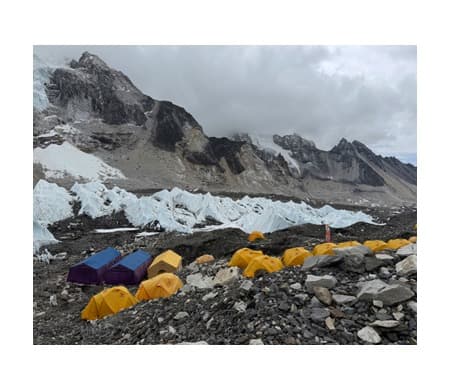
For many trekkers, the most challenging stretch of the trek is the Gorak Shep-Everest Base Camp-Gorak Shep day, especially if you try to fit in a side-hike to Kala Patthar as well.
On top of being at a very high altitude, the hike can be slowed down by uneven ground around the Khumbu glacier. According to the Nepal Tourism Board, "the trail from Gorak Shep to Everest Base Camp should be navigated with care" as it passes over "a stretch of glacier."
How to Prepare for the Everest Base Camp Trek
Preparation should ideally begin 8–12 weeks before the trek, particularly if you do not regularly exercise.
You do not need to become a professional athlete. The objective is to build enough endurance and strength to walk for several consecutive days.
1. Build Cardiovascular Endurance
Start with activities such as:
- Brisk walking
- Hiking
- Jogging
- Cycling
- Stair climbing
- Swimming
Aim for regular cardiovascular exercise rather than occasional intense workouts.
2. Practice Uphill Walking
The EBC trail contains substantial elevation gain.
Try to include hills, stairs or inclined treadmill sessions in your training.
Gradually increase the duration rather than trying to complete extremely long workouts immediately.
3. Strengthen Your Legs
Useful exercises include:
- Squats
- Lunges
- Step-ups
- Calf raises
- Glute bridges
Strong legs help with both climbing and descending.
4. Train With a Backpack
Practice walking while carrying the backpack you expect to use during the trek.
This helps your body adapt to the additional weight and allows you to identify uncomfortable straps, footwear or equipment before reaching the Himalayas.
5. Practice Long Walking Days
Before your trek, include occasional longer hikes.
A good training hike should simulate the conditions you will experience as closely as possible: uneven terrain, elevation changes and several hours of continuous movement.
Mental Preparation for Everest Base Camp
Physical fitness is only one part of the challenge.
At high altitude, your usual pace may be annoyingly slow. Also, it is normal to feel tired when waking up, or to have problems due to the cold or to a climb that seems too difficult.
You can overcome these mental barriers by focusing on a steady rhythm.
Instead of worrying about the whole hike, think about it in small steps:
Village → lunch stop → next village → overnight stop
A slow, consistent pace is generally more sustainable than trying to walk quickly and exhausting yourself early in the day.
What Should You Pack for the EBC Trek?
Your exact equipment depends on the season and itinerary, but essential categories include:
Clothing
- Moisture-wicking base layers
- Fleece or insulating layers
- Down jacket
- Waterproof jacket
- Trekking trousers
- Warm hat
- Gloves
- Hiking socks
Footwear
- Broken-in trekking boots
- Comfortable camp shoes
- Extra socks
Trekking Equipment
- Backpack
- Trekking poles
- Sleeping bag suitable for the expected temperatures
- Headlamp
- Water bottles or hydration system
- Sunglasses
- Sunscreen
- Personal first-aid supplies
Personal Essentials
- Passport and required documents
- Cash
- Power bank
- Toiletries
- Personal medications
- Water purification method
Packing too much can make the trek harder. A lighter, carefully selected pack is generally preferable to carrying unnecessary equipment.
How to Deal With Altitude on the EBC Trek
Altitude should be taken seriously.
Common symptoms associated with altitude sickness can include headache, dizziness, nausea, unusual fatigue and difficulty sleeping.
The most important strategy is gradual acclimatization.
Do not continue ascending simply because your itinerary says you should. If you develop concerning symptoms, tell your guide and follow professional medical advice.
Nepal Tourism Board repeatedly emphasizes taking time to acclimatize in the Everest region because altitude gains become rapid at higher elevations.
A trekking itinerary should therefore prioritize acclimatization over speed.
Best Time for the Everest Base Camp Trek
The most popular trekking periods are generally spring and autumn, when conditions are often favorable for trekking.
Nepal Tourism Board identifies October–November and March–May among the favorable periods for the Everest region, while also noting that winter conditions at higher elevations can be severe.
Spring: March–May
Spring offers warmer conditions compared with winter and is one of the major trekking and mountaineering seasons.
Autumn: October–November
Autumn is another popular period because of generally favorable trekking conditions and mountain visibility.
Winter: December–February
Winter brings colder temperatures and more challenging conditions at high elevations.
Monsoon: June–September
Rain and weather conditions can affect travel and trekking, particularly at lower elevations.
Can You Do the Everest Base Camp Trek Without Climbing Everest?
Yes.
Everest Base Camp Trek is a trekking expedition, but it is not a mountain climbing expedition to the top of Everest.
On this tour you do not scale the world’s highest peak - you go hiking to Everest Base Camp and the viewpoint called Kala Patthar.
The height of Mount Everest is 8,848 meters, and the Everest Base Camp is 5,364 meters above sea level.
This is an essential difference for novice trekkers because it means that they have to undergo a thorough acclimatization process to be able to withstand the effects of high altitude on their bodies.
How Difficult Is EBC Compared With Other Nepal Treks?
The Everest Base Camp Trek is generally a moderate-to-difficult hike.
It is substantially more challenging than many of the shorter, lower-altitude treks in Nepal, but it still primarily consists of a long walk and is not typically categorized as a technical climb.
|
Trek |
General Difficulty |
Main Challenge |
|
Everest Base Camp |
Moderate–Challenging |
Altitude + endurance |
|
Pikey Peak Trek |
Moderate |
Hills + elevation |
|
Gokyo Ri Trek |
Challenging |
Altitude + steep climbs |
|
Everest Three Passes |
Very Challenging |
High passes + altitude |
|
Everest Base Camp + Cho La |
Challenging |
High altitude + pass crossing |
The key difference is that routes such as Everest Three Passes and Everest Base Camp via Cho La introduce additional high mountain passes and more demanding terrain.
How Fit Do You Need to Be for Everest Base Camp?
You should be able to handle several hours of walking comfortably, and be capable of doing heavy workouts day after day.
A good indicator that one has prepared themselves sufficiently is being able to go on a long walk without feeling absolutely wiped, and recovering afterwards.
You know, something tells me that you shouldn't have to be able to run a marathon.
Instead, focus on:
Endurance + leg strength + hiking experience + altitude awareness + mental preparation
If you have a medical condition or are unsure whether high-altitude trekking is appropriate for you, consult a qualified medical professional before planning the trek.
What is the hardest part of the Everest Base Camp Trek?
For many trekkers, the biggest challenge is combining high altitude with long walking days. The final section around Gorak Shep and Everest Base Camp can feel particularly difficult because of the elevation.
How can I train for Everest Base Camp?
Focus on cardiovascular endurance, uphill walking, leg strength and long hikes. Begin training several weeks before departure and gradually increase the duration and difficulty of your workouts.
Conclusion
The Everest Base Camp Trek is tough. You can do it if you get ready the right way.You do not have to be an experienced mountain climber.
The Everest Base Camp Trek requires you to be able to walk for a time every day you need to be patient and go slow and you have to be disciplined about getting used to the high altitude.
The hardest part of the Everest Base Camp Trek is not how far you have to walk.
The biggest challenge of the Everest Base Camp Trek is that you have to go high more than 5,000 meters and you have to keep walking for many days.
If you train properly have the gear plan your trip well and get used to the high altitude slowly the Everest Base Camp Trek is something you can achieve even if you have never done a high-altitude trek before.
Frequently Asked Questions
1.Is Everest Base Camp Trek difficult for beginners?
The trek can be completed by fit beginners, but it should not be treated as an easy holiday. The major challenges are altitude, long walking days, steep terrain and cold weather. Adequate preparation and acclimatization significantly improve the experience.
2.How many kilometers is the Everest Base Camp Trek?
A typical Lukla-to-EBC-and-back itinerary covers approximately 120–130 km, although the exact distance varies by route and itinerary.
3.What is the highest altitude on the Everest Base Camp Trek?
For the standard itinerary, Kala Patthar at approximately 5,545 meters is generally the highest point trekkers reach. Everest Base Camp itself is around 5,364 meters.
4.How many days does the Everest Base Camp Trek take?
A typical trek takes around 12–14 trekking days from Lukla and back, with additional travel days depending on the overall trip plan. Longer itineraries may be used to provide more acclimatization or buffer days.
5.Do I need previous trekking experience?
No. Previous high-altitude trekking experience is helpful but not essential. Physical preparation, a sensible itinerary and proper acclimatization are more important for most first-time trekkers.
6.Can a beginner climb Everest Base Camp?
Yes. Reaching Everest Base Camp does not require climbing Mount Everest. The standard EBC journey is a trek and does not require technical mountaineering skills.