
- Exclusive Cultural Immersion: Experience the non-commercialized traditions of the Tsumba people, engaging with local monks and nuns in active, remote monasteries like Mu Gompa and Rachen Gompa.
- Uncrowded Trails: Trek through a restricted region that strictly limits visitor numbers, offering profound peace compared to Nepal’s more heavily trafficked routes.
- Optimal Altitude Profiling: Benefit from a carefully planned "climb high, sleep low" itinerary that maximizes safety and ensures proper acclimatization.
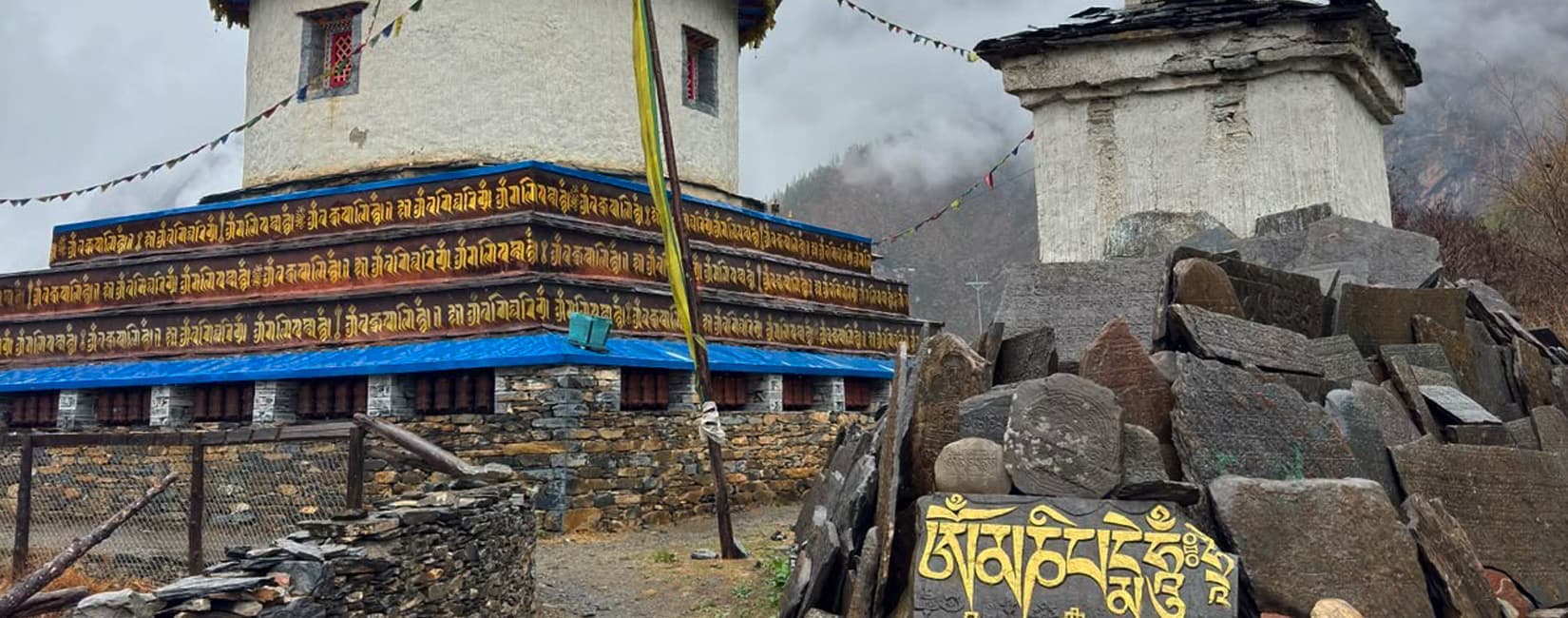
- Sacred Himalayan Sites: Visit Milarepa’s Cave (Piren Phu), viewing ancient Buddhist murals, carved Mani walls, and historical chortens untouched by modern development.
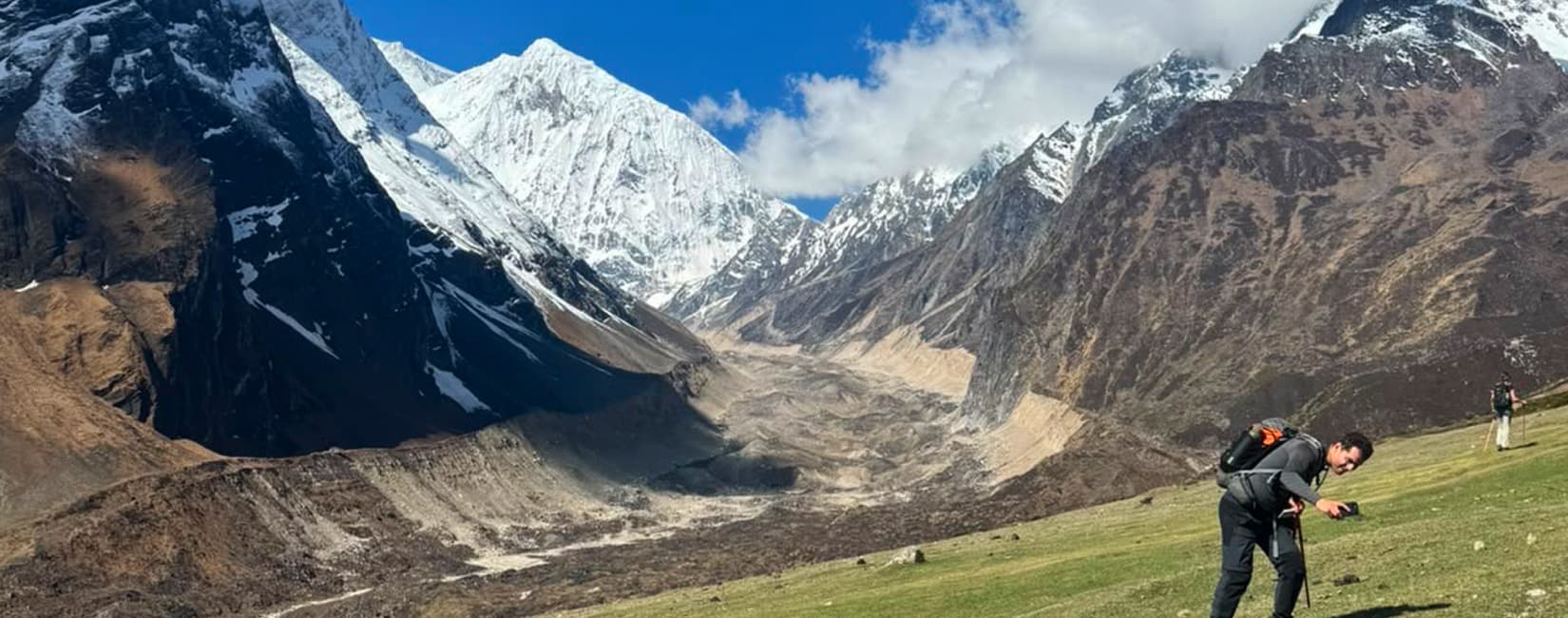
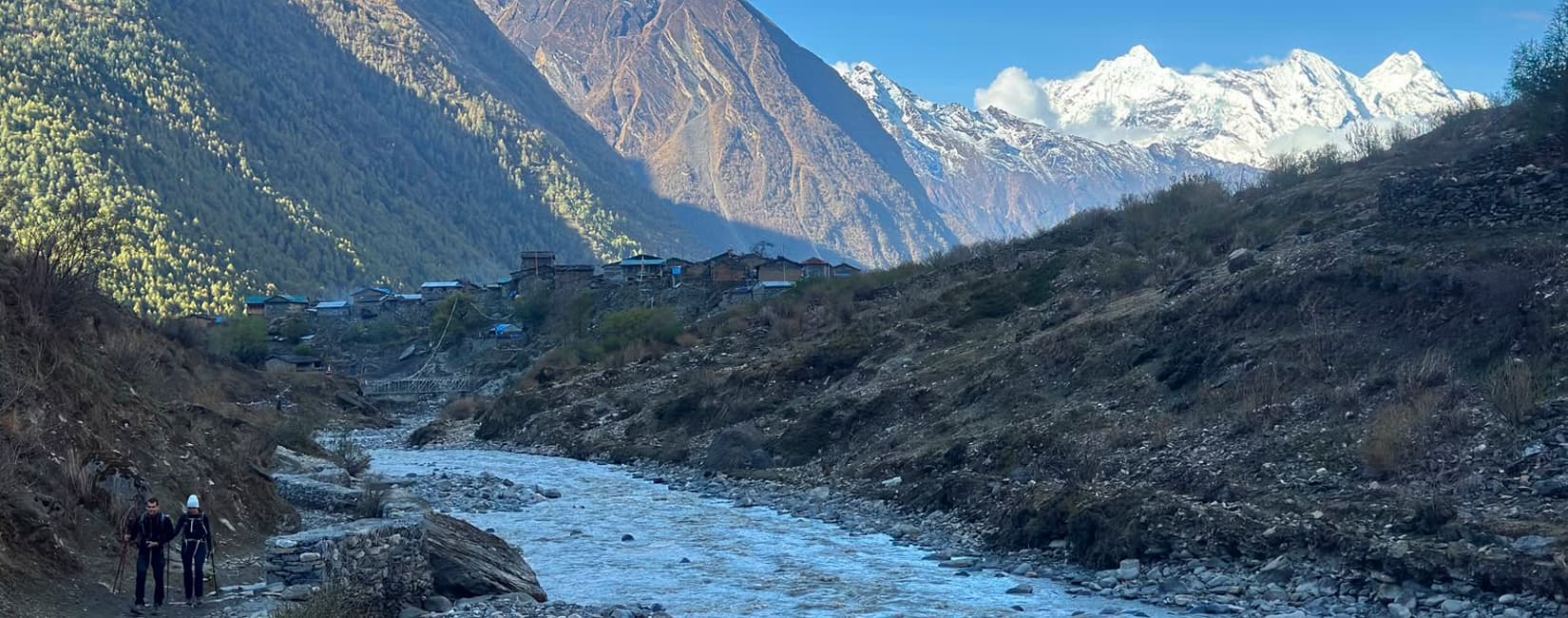
- Dramatic Topographical Shifts: Witness the landscape transform from subtropical river gorges and dense rhododendron forests to sweeping, arid alpine valleys bordering the Tibetan plateau.
Tsum Valley Trek
- DestinationNepal
- Duration14 Days
- GradeDifficult
- ActivitiesTrekking
- AccommodationHotels & Teahouses
- Max. Elevation3700m.
- Group SizeMin. 1 Pax
- VehicleLand
- MealsB & B, L, D
- LanguageEnglish
Trip Highlight
Tsum Valley Trek
Trail Details
Journey Through Tsum Valley Trek
Step into a living museum of Tibetan Buddhism in the restricted and pristine Tsum Valley, a sanctuary where ancient traditions remain untouched by modern time. The 14 Days Tsum Valley Trek is a curated expedition that seamlessly blends the raw, awe-inspiring beauty of the Ganesh Himal range with deeply authentic cultural encounters in remote monasteries and nunneries. Designed for the discerning traveler, active seniors, and mindful trekkers, this journey offers an off-the-beaten-path exclusivity without compromising on expert logistics and safety. Explore a hidden world of stone-walled villages, spinning prayer wheels, and expansive alpine valleys where tranquility reigns supreme.
Route Overview
The journey begins in the vibrant capital of Kathmandu before shifting to an overland drive through lush middle-hill landscapes to Machha Khola. From here, you follow the rugged Budhi Gandaki River gorge northward, acclimatizing through subtropical forests and terraced farming villages. At Jagat, you enter the restricted region, eventually branching east off the main Manaslu trail at Lokpha to penetrate the hidden Tsum Valley. The route steeply ascends through dense pine forests into a wide, high-altitude alpine valley bordering Tibet. The trail reaches its zenith at the sacred Mu Gompa (3,700m), offering profound spiritual encounters before descending back through the valley, rejoining the main gorge, and concluding with a drive back to Kathmandu.
Peaks and sites seen during the trip
- Ganesh Himal Range: A dominant, jagged massif visible throughout the upper valley, renowned for its brilliant ice-fluted peaks.
- Shringi Himal (7,161m): A highly revered mountain among local Tibetan Buddhists, dominating the northern skyline as you enter Lokpha.
- Mu Gompa (3,700m): The largest and most isolated monastery in the region, situated on a desolate, beautiful high plateau near the Tibetan border.
- Rachen Gompa: A massive, active nunnery nestled in the valley floor near Nile, offering insight into the daily spiritual lives of the region's female monastics.
- Milarepa’s Cave (Piren Phu): One of the most sacred caves in the Himalayas, where the legendary Tibetan saint Milarepa is believed to have meditated.
Table of Altitude & Highlights
|
Place |
Altitude |
Major Highlight |
|
Kathmandu |
1,400m / 4,593ft |
Ancient heritage sites and vibrant city energy. |
|
Machha Khola |
900m / 2,952ft |
Bustling trailhead atmosphere alongside the Budhi Gandaki River. |
|
Jagat |
1,340m / 4,396ft |
Stone-paved streets at the official restricted area entry point. |
|
Lokpha |
2,240m / 7,349ft |
First striking views of the Shringi Himal and entry into Tsum. |
|
Chumling |
2,386m / 7,828ft |
Traditional Tibetan agricultural life and ancient local monasteries. |
|
Chokhangparo |
3,010m / 9,875ft |
Expansive valley views and interaction with the local Tsumba people. |
|
Nile |
3,361m / 11,026ft |
High-alpine serenity and visits to the nearby Rachen Gompa nunnery. |
|
Mu Gompa |
3,700m / 12,139ft |
Panoramic Tibetan plateau views from the region's largest monastery. |
Table of Temperature
|
Location |
March (High/Low) |
April (High/Low) |
May (High/Low) |
Sept (High/Low) |
Oct (High/Low) |
Nov (High/Low) |
|
Kathmandu |
25°C / 9°C |
28°C / 12°C |
29°C / 16°C |
28°C / 17°C |
26°C / 13°C |
23°C / 8°C |
|
Jagat |
18°C / 6°C |
22°C / 9°C |
25°C / 12°C |
24°C / 13°C |
20°C / 9°C |
15°C / 5°C |
|
Chokhangparo |
10°C / -2°C |
14°C / 1°C |
16°C / 4°C |
15°C / 5°C |
12°C / 0°C |
8°C / -5°C |
|
Mu Gompa |
5°C / -8°C |
8°C / -4°C |
11°C / -1°C |
10°C / 0°C |
6°C / -5°C |
2°C / -10°C |
Trip Alternatives
- Manaslu Circuit Trek: Ideal for those who want to cross a challenging high-altitude pass (Larkya La at 5,106m) rather than focusing solely on a single cultural valley.
- Langtang Valley Trek: A shorter, more accessible alternative offering stunning alpine scenery and rich Tamang heritage closer to Kathmandu.
- Upper Mustang Trek: Perfect for travelers seeking a desert-like trans-Himalayan landscape and ancient cave monasteries, completely avoiding the monsoon rains.
Elevation Chart
Detailed Itinerary
Tsum Valley Trek - 14 days
- Day 01
Arrival in Kathmandu
Your Himalayan journey begins the moment your flight touches down at Tribhuvan International Airport. After clearing customs and securing your visa, you will be warmly greeted by our ground logistics team. You will then be transferred directly to your hotel through the chaotic, colorful, and vibrant streets of Kathmandu. The afternoon is kept completely free of scheduled activities to allow your body to recover from international jet lag and adapt to the city’s unique energy. In the late afternoon, your lead trekking guide will meet you in the hotel lobby for a comprehensive trip briefing, checking your gear and finalizing the paperwork for your restricted area permits. Enjoy a quiet evening settling into the rhythm of Nepal.
- AccommodationHotel
- Travel Duration30 min
- Travel Distance5 km (Airport to Hotel)
- RouteTribhuvan International Airport to Kathmandu Metropolitan City
- Transportationcar
- Elevation1,400m
- Day 02
Kathmandu to Machha Khola (The Journey to the Mountains)
Depart Kathmandu early after a hearty breakfast, loading into your vehicle to leave the Kathmandu Valley. The drive follows the winding Prithvi Highway along the Trisuli River, offering spectacular views of lush middle-hill landscapes, terraced farming plots, and distant snow-capped peaks. After reaching Dhading Besi, the paved road transitions into a rugged, bumpy dirt track heading north into the deep gorge of the Budhi Gandaki River. You will pass through rural settlements and witness the daily life of Nepali farmers before arriving at the lively trailhead village of Machha Khola. The air here is warm and subtropical, and the village bustles with mule trains and fellow trekkers preparing for the days ahead.
- MealsBreakfast, Lunch, and Dinner Included
- AccommodationGuesthouse (Basic Lodge/Community Lodge)
- Travel Duration7–8 hours driving
- Travel DistanceApprox. 160 km
- RouteKathmandu Metropolitan City to Machha Khola
- Transportationcar
- Elevation1,400m to 900m
- Day 03
Machha Khola to Jagat (Entering the Restricted Area)
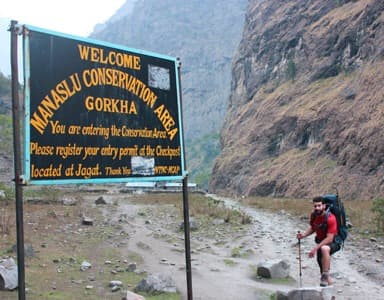
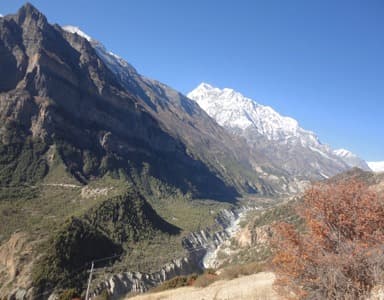
Start your first day of trekking by navigating the narrow trails hugging the Budhi Gandaki River gorge. The path undulates constantly, forcing you to climb over rocky outcrops and descend back to the riverbanks. You will cross several thrilling steel suspension bridges adorned with prayer flags. Along the route, the trail passes through the small settlement of Tatopani, where you can briefly dip your hands in the natural hot springs issuing from the rock face. In the afternoon, a steep, dramatic climb over a rocky ridge brings you into Jagat. This beautiful village features distinct stone-paved streets and serves as the official checkpoint where your restricted area permits are verified by local authorities.
- MealsBreakfast, Lunch, and Dinner Included
- AccommodationGuesthouse (Basic Lodge/Community Lodge)
- Travel Duration6–7 hours trekking
- Travel DistanceApprox. 14 km
- RouteMachha Khola to Jagat
- Transportationfoot
- Elevation900m to 1,340m
- Day 04
Jagat to Lokpha (The Gateway to Tsum)
Leave Jagat and walk upward through the expansive terraced fields of Philim, a large Gurung village known for its local school and vibrant agriculture. Beyond Philim, the gorge narrows dramatically, and the trail cuts through beautiful, dense pine and rhododendron forests. At the small hamlet of Ekle Bhatti, you will reach a crucial junction. Here, you leave the main Manaslu Circuit trail, cross a bridge over the Budhi Gandaki, and turn east to officially enter the hidden Tsum Valley. The trail ascends steeply through isolated terrain until you reach Lokpha. This secluded village rewards your climbing efforts with your very first, awe-inspiring views of the towering Shringi Himal.
- MealsBreakfast, Lunch, and Dinner Included
- AccommodationGuesthouse (Basic Lodge/Community Lodge)
- Travel Duration6 hours trekking
- Travel DistanceApprox. 10 km
- RouteJagat to Lokpha
- Transportationfoot
- Elevation1,340m to 2,240m
- Day 05
Lokpha to Chumling (Deep into the Pine Forests)
Today’s trek presents a challenging but highly rewarding topographical puzzle. Begin with a sharp descent down to the Lungwa River, navigating narrow paths flanked by ancient, moss-draped pine and rhododendron trees. After crossing the river, the trail pitches upward in a grueling, zigzagging climb that tests your stamina. As you gain altitude, the dense canopy occasionally breaks to reveal stunning glimpses of the Ganesh Himal range glistening in the sunlight. By mid-afternoon, you will arrive at Chumling, a traditional Tibetan-style village characterized by its stone houses and barley fields. Spend the remainder of the day resting or exploring the three ancient monasteries that anchor the spiritual life of this farming community.
- MealsBreakfast, Lunch, and Dinner Included
- AccommodationGuesthouse (Basic Lodge/Community Lodge)
- Travel Duration4–5 hours trekking
- Travel DistanceApprox. 7 km
- RouteLokpha to Chumling
- Transportationfoot
- Elevation2,240m to 2,386m
- Day 06
Chumling to Chokhangparo (The Upper Valley Opens)
Set out from Chumling and follow the trails alongside the Shiar Khola, a vital tributary carving through the valley. The morning walk involves steady elevation gain through a relatively narrow gorge. Suddenly, the landscape undergoes a dramatic transformation: the tight gorge opens up into a sprawling, fertile alpine valley. This expansive scenery represents the classic imagery of the Tsum Valley. You will arrive at the twin settlements of Chokhangparo, situated on flat, stony terrain. The local Tsumba people are deeply rooted in Tibetan Buddhism and often welcome visitors with traditional salted butter tea. Crossing the 3,000-meter threshold today means strict hydration and pacing are crucial to ward off altitude sickness.
- MealsBreakfast, Lunch, and Dinner Included
- AccommodationGuesthouse (Basic Lodge/Community Lodge)
- Travel Duration5–6 hours trekking
- Travel DistanceApprox. 9 km
- RouteChumling to Chokhangparo - Chekumpar
- Transportationfoot
- Elevation2,386m to 3,010m
- Day 07
Chokhangparo to Nile (Journey to the Valley's End)
Explore the deeply spiritual heart of the upper Tsum Valley. The trail meanders gently through traditional agricultural villages where yaks graze freely. You will pass numerous ancient Chortens and meticulously carved Mani walls that dictate a respectful left-to-right passing. A major highlight today is visiting Milarepa’s Cave (Piren Phu), a sacred site featuring preserved footprints and vibrant Buddhist murals where the 11th-century saint meditated. The walk remains largely flat as you approach Nile, the last permanent settlement in the valley. Just across the river sits Rachen Gompa, a massive, active nunnery. Spend the afternoon sitting in the courtyard, absorbing the profound spiritual quietude of this high-alpine sanctuary.
- MealsBreakfast, Lunch, and Dinner Included
- AccommodationGuesthouse (Basic Lodge/Community Lodge)
- Travel Duration4–5 hours trekking
- Travel DistanceApprox. 8 km
- RouteChokhangparo - Chekumpar to Nile
- Transportationfoot
- Elevation3,010m to 3,361m
- Day 08
Nile to Mu Gompa (3,700m) & Return to Chokhangparo (The Highest Point)
Begin a steady, breathless ascent toward the highest point of the trek. The landscape becomes stark, treeless, and incredibly dramatic as you approach the Tibetan border. After a solid three-hour climb, you reach Mu Gompa at 3,700 meters. As the largest and highest monastery in the region, it feels like the edge of the world. Explore the prayer halls, observe the monks' daily rituals, and photograph the sweeping panoramic views of the Tibetan plateau and surrounding ice peaks. After fully experiencing this spiritual apex, you will adhere to the "climb high, sleep low" safety principle by trekking back down the valley, bypassing Nile, and returning to Chokhangparo for a comfortable night's rest in thicker air.
- MealsBreakfast, Lunch, and Dinner Included
- AccommodationGuesthouse (Basic Lodge/Community Lodge)
- Travel Duration7 hours trekking
- Travel DistanceApprox. 13 km
- RouteNile to Chokhangparo - Chekumpar
- Transportationfoot
- Elevation3,361m to 3,010m
- Day 09
Chokhangparo to Lokpha (The Descent Begins)
Leave the sweeping high-altitude plains behind as you retrace your steps southward down the valley. Walking in the opposite direction provides an entirely new visual perspective, putting the massive, icy face of the Ganesh Himal range squarely in your line of sight. The descent is long and continuous, offering a chance to cover significant ground quickly, though it demands careful foot placement to protect your knees (trekking poles are highly recommended today). You will drop back below the tree line, re-entering the oxygen-rich pine and rhododendron forests. Stop in Chumling to rest and enjoy a hot lunch before pushing through the final forested slopes to arrive back at the secluded village of Lokpha.
- MealsBreakfast, Lunch, and Dinner Included
- AccommodationGuesthouse (Basic Lodge/Community Lodge)
- Travel Duration6–7 hours trekking
- Travel DistanceApprox. 16 km
- RouteChokhangparo - Chekumpar to Lokpha
- Transportationfoot
- Elevation3,010m to 2,240m
- Day 10
Lokpha to Jagat (Rejoining the River)
Bid farewell to the hidden Tsum Valley as you descend sharply back to the main Budhi Gandaki river gorge. At the bridge junction, you rejoin the main Manaslu Circuit thoroughfare, leaving the deep isolation behind. The trail takes you down through the terraced agricultural slopes of Philim once more, where the climate begins to feel noticeably warmer and more humid. Navigate the rocky ridges downward until you reach the beautifully stone-paved streets of Jagat. The evening vibe in Jagat is lively and bustling, as trekkers from both Manaslu and Tsum routes converge. Note: Platinum Tier guests have the option to take a scenic helicopter flight from Philim back to Kathmandu today to maximize luxury.
- MealsBreakfast, Lunch, and Dinner Included
- AccommodationGuesthouse (Basic Lodge/Community Lodge)
- Travel Duration5–6 hours trekking
- Travel DistanceApprox. 10 km
- RouteLokpha to Jagat
- Transportationfoot
- Elevation2,240m to 1,340m
- Day 11
Jagat to Machha Khola (The Final Footsteps)
Your final day of walking is a steady, undulating descent through the lower, subtropical sections of the Budhi Gandaki gorge. The dense alpine forests are replaced entirely by bamboo groves, banana trees, and terraced rice paddies. The roaring river provides a constant soundtrack as you cross the final suspension bridges of the trip. Upon arriving in Machha Khola, the physical exertion of the trek officially concludes. Celebrate this significant achievement with your dedicated guide and porter team, enjoying a festive final evening in the mountains filled with local food, shared stories, and well-earned relaxation.
- MealsBreakfast, Lunch, and Dinner Included
- AccommodationGuesthouse (Basic Lodge/Community Lodge)
- Travel Duration5–6 hours trekking
- Travel DistanceApprox. 14 km
- RouteJagat to Machha Khola
- Transportationfoot
- Elevation1,340m to 900m
- Day 12
Machha Khola to Kathmandu (Return to Civilization)
Board your designated vehicle—either a private 4WD jeep or a shared local bus, depending on your selected service tier—for the long overland journey back to the capital. The drive traces the rough dirt tracks back to Dhading Besi before hitting the smoother tarmac of the Prithvi Highway. Watch through the window as the rural, peaceful farm terraces slowly give way to the bustling, chaotic cityscape of Kathmandu. Upon arrival, check into your comfortable hotel and enjoy the unparalleled luxury of a long, hot shower. In the evening, join our team for a premium farewell dinner at a heritage restaurant, celebrating the successful completion of your Himalayan adventure.
- MealsBreakfast, Lunch, and Dinner Included
- AccommodationHotel
- Travel Duration7–8 hours driving
- Travel DistanceApprox. 160 km
- RouteMachha Khola to Kathmandu Metropolitan City
- Transportationcar
- Elevation900m to 1,400m
- Day 13
Kathmandu Buffer Day
This day is intentionally built into the itinerary as a crucial safety buffer. High Himalayan environments and rural mountain roads are unpredictable; this extra day ensures that any unexpected delays on the trail or the highway do not jeopardize your international flight schedule. If the trek runs perfectly on time, today transforms into a leisurely exploration day. Take a short private drive to visit Kathmandu’s iconic UNESCO World Heritage sites, such as the sacred Swayambhunath (Monkey Temple) or the historic Kathmandu Durbar Square. Spend your afternoon hunting for pashminas and singing bowls in the vibrant alleys of Thamel, or simply recover with a spa treatment at your hotel.
- MealsBreakfast Included
- AccommodationHotel
- Travel DurationVariable (City transit)
- Travel DistanceApprox. 10 km (City exploration)
- RouteKathmandu Metropolitan City to Kathmandu Metropolitan City
- Transportationcar
- Elevation1,400m
- Day 14
Final Departure
Enjoy a final, unhurried breakfast at your hotel, reflecting on the ancient monasteries, towering peaks, and profound cultural encounters of the past two weeks. Depending on your flight departure time, you may have a few spare hours for last-minute souvenir shopping or a final cup of Nepali coffee in a quiet courtyard. Our logistics team will coordinate a private transfer to Tribhuvan International Airport (TIA), ensuring you arrive exactly three hours prior to your scheduled departure. We wish you a safe journey home, carrying the enduring spirit of the hidden Himalayas with you.
- MealsBreakfast Included
- Travel Duration30 minutes to airport
- Travel DistanceApprox. 5 km (Hotel to Airport)
- RouteKathmandu Metropolitan City to Tribhuvan International Airport
- Transportationcar
- Elevation1,400m
If the provided schedule isn't suitable for you, we can create personalized travel arrangements.
Customize My TripTrekking Guide
Everything you need to know
Climbing Grades
The 14 Days Tsum Valley Trek is classified as Strenuous. While it does not require technical mountaineering skills, ropes, or crampons, it demands sustained, multi-day walking over uneven, rocky, and sometimes steep terrain. You will encounter continuous ascents and descents through river gorges and high-altitude alpine valleys.
Physical Requirement and Health
Participants must possess a high level of cardiovascular fitness and muscular endurance. You should be comfortable hiking for 5 to 8 hours a day, carrying a light daypack. Prior experience with long-distance hiking is highly recommended. Individuals with pre-existing heart, lung, or joint conditions must consult a physician before booking, as medical facilities in this remote region are virtually non-existent.
Training program
Begin training at least 8 to 12 weeks prior to arrival. Your regimen should focus on cardiovascular exercises (running, cycling, and swimming) for 45-60 minutes, 3-4 times a week. Incorporate strength training focusing on your core, gluts, and legs (squats, lunges). Most importantly, schedule weekly long hikes (4-6 hours) carrying a weighted backpack (5-7 kg) on varied terrain to condition your joints and boots.
Age Limit
There is no strict legal age limit, but we recommend this trek for individuals between 15 and 70 years of age. Minors must be accompanied by a legal guardian and demonstrate significant hiking experience. Seniors must provide a recent medical clearance certificate due to the cardiovascular demands of altitudes up to 3,700m.
Group size
To maintain the pristine nature of the region and ensure personalized attention, we operate with a minimum of 1 participants (a government requirement for restricted area permits) and a maximum of 14 participants per group. Small group sizes allow for authentic interactions in local monasteries and ensure our guides can closely monitor everyone's health.
Best time to visit and weather conditions
- Spring (March to May): Excellent visibility and stable weather. Rhododendrons bloom in the lower elevations. March is crisp; by May, temperatures warm significantly.
- Autumn (September to November): The most popular season. Skies are crystal clear following the monsoon, offering the best views of the Ganesh Himal. Nights become progressively colder by late November.
Note: Winter (Dec-Feb) brings heavy snow blocking upper valley trails, and Summer/Monsoon (June-Aug) causes landslides in the lower Budhi Gandaki gorge.
Visa Information
All foreign nationals (except Indian citizens) require a visa to enter Nepal. You can obtain a 15, 30, or 90-day tourist visa on arrival at Tribhuvan International Airport (TIA) or at land borders. Ensure your passport is valid for at least six months beyond your entry date and contains at least one blank page. Carry crisp, non-creased USD or EUR cash for the visa fee.
For more information, please check out the Nepal government website at https://www.immigration.gov.np
Necessary Permits
This is a restricted region requiring special documentation. Foreigners and SAARC nationals require:
- Restricted Area Permit (RAP) for Tsum Valley (USD 40 for the first 8 days, plus USD 7 per extra day).
- Manaslu Conservation Area Project (MCAP) permit.
Solo trekking was illegal; but now you must can trek with a licensed guide. Indian nationals also require the MCAP permit but have different fee structures.
Insurance details
Comprehensive travel insurance is mandatory. Your policy must explicitly cover high-altitude trekking up to 4,000 meters and emergency helicopter evacuation (search and rescue). Standard travel insurance usually excludes high-altitude activities. Top providers include World Nomads (Global), Global Rescue (USA/Global), True Traveler (UK/Europe), and Cover-More (Australia). Purchase this in your home country before departure.
Transportation and/or Domestic Flight
The journey relies heavily on overland transit. The drive from Kathmandu to Machha Khola takes 7-8 hours depending on road conditions. Silver tier utilizes shared local buses, while Gold and Platinum tiers utilize private 4WD jeeps for enhanced comfort and safety on the rugged dirt tracks of the Budhi Gandaki gorge. Platinum guests may opt for helicopter extraction at the end of the trek.
Packaging and Luggage Information
Pack using the layering principle. Essential items include a high-quality down jacket, waterproof/windproof shell jacket and trousers, thermal base layers, broken-in trekking boots, and a warm sleeping bag (rated to -10°C). Luggage is restricted: your main duffel bag (carried by porters) should not exceed 12.5 kg, and your daypack (carried by you) should weigh around 5 kg.
Porter service and guidelines
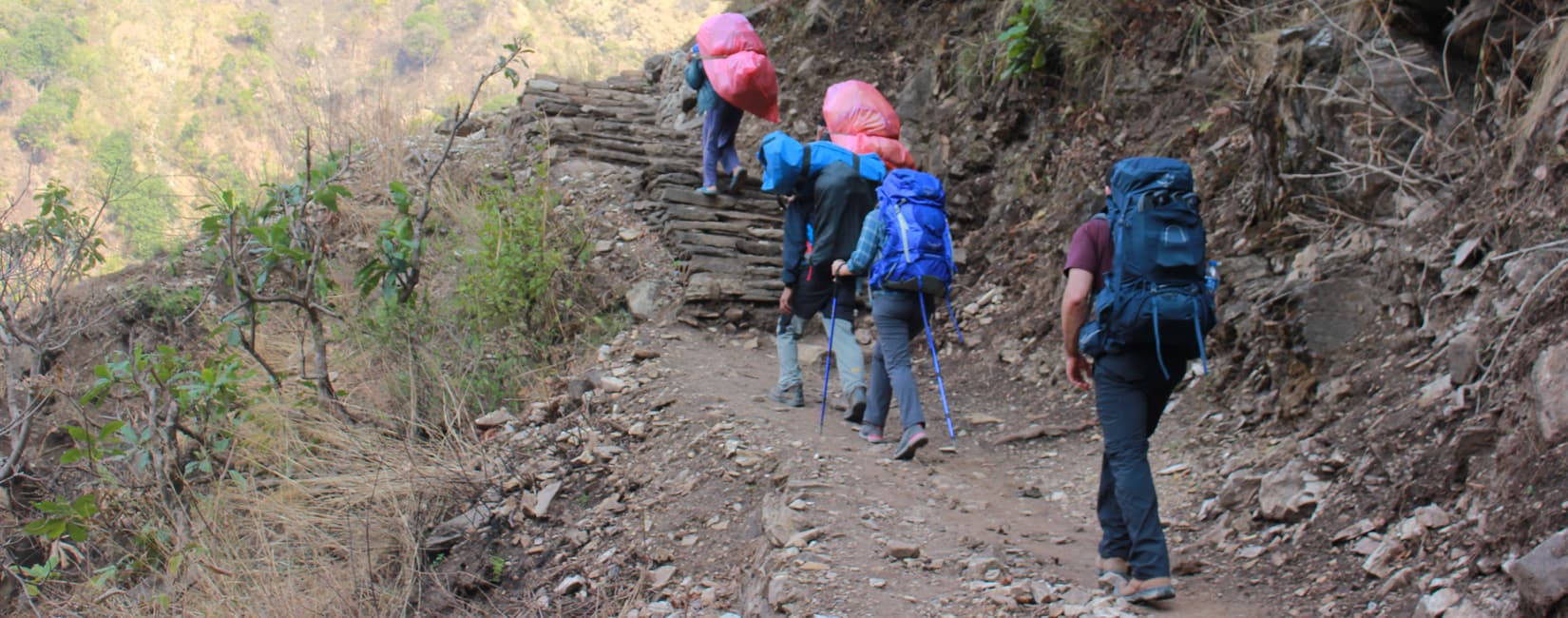
Porters are the backbone of Himalayan expeditions. We assign one porter for every two trekkers (carrying a combined maximum of 25 kg). Keep your duffel bag fully waterproofed. Treat porters with the utmost respect; our company adheres strictly to ethical trekking guidelines, ensuring porters receive proper alpine clothing, insurance, fair wages, and load limits.
Accommodation, meals, and water
Accommodation relies on traditional "teahouses" (mountain lodges). Rooms are basic, unheated, and feature twin beds with foam mattresses. Silver tier uses standard shared facilities, while Gold/Platinum tiers secure rooms with attached bathrooms where available. Meals consist of hearty local dishes like Dal Bhat (rice and lentils), momo, and noodle soups. Drink only boiled or purified water; bring water purification tablets or a UV filter to eliminate single-use plastics.
Altitude Information, Acclimatization, and AMS safety
The maximum elevation is 3,700m at Mu Gompa. Acute Mountain Sickness (AMS) is a genuine risk. Our itinerary utilizes the "climb high, sleep low" strategy to aid acclimatization. Symptoms of AMS include headache, nausea, dizziness, and fatigue. Our guides are trained in wilderness first aid and carry comprehensive medical kits. Strict hydration (3-4 liters daily) is enforced.
Internet and Phone connectivity
Connectivity is highly limited. In the lower regions (up to Jagat), local NTC or Ncell SIM cards provide sporadic 3G/4G coverage. Once inside the upper Tsum Valley, cellular networks disappear completely. Some teahouses offer satellite-based Wi-Fi for an additional daily fee, but connections are slow and unreliable. Prepare for a true digital detox.
Currencies acceptable and to use
The Nepalese Rupee (NPR) is the only acceptable currency on the trail. There are no ATMs beyond Kathmandu or Arughat. You must carry sufficient local cash to cover personal expenses such as Wi-Fi, hot showers, battery charging, snacks, and tipping. Exchange your foreign currency in Kathmandu prior to departure.
Tipping Guidelines
Tipping is not mandatory but is a deeply ingrained cultural expectation to show appreciation for hard work. A general guideline is to pool approximately 10% to 15% of your total trip cost to distribute among your guide, assistant guides, and porters on the final evening of the trek. The lead guide usually receives a slightly larger share for managing the expedition.
Area Guidelines
The Tsum Valley is a sacred, non-violent zone (Shagya). The slaughtering of animals is strictly prohibited by local decree. Visitors are expected to respect this by refraining from ordering or consuming meat while in the upper valley. Respect the deep spiritual tranquility by avoiding loud music, shouting, or disruptive behavior near villages and monasteries.
Photography guidelines and cultural sensitivity
Always ask for permission before photographing local people, especially monks, nuns, and the elderly. Photography inside the main prayer halls of gompas (monasteries) is almost universally forbidden; look for signage or ask your guide. When walking past Mani walls (stones carved with mantras) or Chortens, always pass them on your right side as a sign of Buddhist respect.
Social Responsibility
There is never a question about social responsibility when it comes to the staff and management at Himalayan Planet Adventures. This is our country, and we take pride in it. We are committed to maintaining our beauty and uplifting the people we work with.
Following the 2015 Gorkha Earthquake, Himalayan Planet Adventures raised over USD 5,000 for earthquake relief. In addition, our people contributed hundreds of person-hours to helping earthquake victims in the rural mountain areas, which were the most severely affected.
We brought relief in the form of food, tents, and blankets to the villagers. We reached many villages before the government and NGO relief organizations could arrive with aid. We knew how to get there, and our people transported the necessary supplies on their backs, arriving before roads could be reopened following the landslides caused by the earthquake.
Our social responsibility doesn't end there. All of our guides and porters come from the rural areas. Their incomes help support families back in the mountains, thereby allowing rural children to access education.
We practice responsible environmental trekking by avoiding disposable water bottles and using only biodegradable items. All non-biodegradable goods are removed from the mountains, preserving the land for future generations to enjoy.
Himalayan Planet Adventures is committed to upholding strict standards of social responsibility, as the mountains are our home and we want to preserve them for future generations to enjoy.
Our Experience
Himalayan Planet Adventures is a government-registered company based in Kathmandu, Nepal. We have over ten years of experience in the trekking and travel industry, having become a recognized leader among our peers as well as various professional organizations. We are members of TAAN, NMA, ASTA, ATTA and more.
Our knowledge of people, government agencies, and current conditions extends to Nepal, Bhutan, Tibet, India, and Bangladesh. We have a strong working knowledge of adventure tourism in these countries, understanding the available resources and conditions.
Himalayan Planet Adventures maintains a 95% satisfaction rate, one of the highest in all tourism companies in Nepal. We encourage you to speak with our clients to learn about their past experiences with Himalayan Planet Adventures. We take great pride in knowing that you will encounter only the finest praise and recommendations from clients around the world.
How to Book this trip
- Check Our Website: Visit our website to see available departure dates and the current status of each trek.
- Contact Us: Reach out via email or phone to confirm date availability for your group size and to ask any questions.
- Book your Spot: After reading our booking terms, please send us a 20% advance deposit per person via bank transfer.
- Confirmation & Final Payment: Your booking is confirmed once we receive your signed form and deposit. We will send you an invoice for the final balance. The remaining 80% is due upon your arrival in Kathmandu and can be paid in cash or by credit card.
We at Himalayan Planet Adventures look forward to serving you, your friends and family as you prepare to embark on a trip of a lifetime in the Mighty Himalayas.
Trip FAQs
General FAQ’s for Nepal
Who are the luxury trekking operators in Nepal, and what makes you different?
While many companies offer standard backpacker packages, specialized luxury trekking operators in Nepal like Himalayan Planet Adventures focus entirely on high-end logistics. We distinguish ourselves by providing a truly "seamless" experience. From the moment you land, you will enjoy five-star hospitality in Kathmandu and exclusive access to the absolute best available mountain lodges on the trail.
Why is Himalayan Planet Adventures the best tour and trekking company in Nepal?
Himalayan Planet Adventures focuses on providing personalized trekking and travel experiences in Nepal, with a particular focus on the Everest Base Camp Trek. Our experienced trekking guides have more than 10 years of experience and have supported travelers from the UK, North America, Europe, and around the world. Before each trek, we provide a personalized pre-trek consultation to help travelers prepare for altitude, equipment, itinerary, acclimatization, and other important aspects of the journey. We also maintain an emergency evacuation plan to coordinate appropriate assistance if a serious emergency occurs during a trek. Rather than relying only on the claim of being “the best,” Himalayan Planet Adventures focuses on experienced local guides, careful preparation, personalized service, transparent information, and dependable support throughout the journey.
What should I know about booking my flights to Kathmandu, Nepal?
When booking flights to Kathmandu, Nepal, aim to land at Tribhuvan International Airport (KTM) at least one full day before your trip begins. This gives you time to shake off the jet lag, and attend a private pre-trip briefing and gear check at our office to ensure you are 100% prepared.
Do I need to plan an extra day in Kathmandu?
Generally, if you book Tours in Nepal, no extra day is necessary. But if you are going for Treks and Expedition, we strongly advise adding at least 1 extra day in Kathmandu as a contingency buffer at the very end of your itinerary so you never have to stress about missing your flight’s home!
Will my private guide in Nepal speak good English?
Yes! Every single English speaking tour/trekking/nature/hiking guide in Nepal employed by Himalayan Planet Adventures is government-certified and highly fluent. They aren't just there to show you the trail; they are rigorously trained to communicate technical safety details and share rich, local cultural stories so you truly connect with the Himalayas.
Can I request a foreign language guide in Nepal instead?
Of course. We know our luxury travelers come from all over the globe. If you prefer, we can easily provide an experienced German speaking guide in Nepal, or a Spanish speaking guide in Nepal (as well as French and Chinese experts). Just let us know your preferred language when booking, and we will arrange it for a small additional premium to ensure you feel completely at home!
Nepal’s Visa Processing & Arrival
Does Nepal has an international airport?
Yes, Tribhuvan International Airport (TIA) in Kathmandu is the main international hub, but Pokhara and Bhairahawa international airports are occasionally operated.
Do I need a visa for Nepal, and can I get a Nepal visa on arrival?
Yes, almost all foreign nationals need a visa, but getting a Nepal visa on arrival at Tribhuvan International Airport is incredibly easy. We highly recommend completing the Nepal visa application online before you fly. Just print the barcode, bring it to the airport kiosk, and skip the longest lines!
Is any nationality banned on-arrival visa for Nepal entry?
While Nepal has an incredibly welcoming open-door policy for most of the world, there are a few exceptions. Citizens of approximately 12 countries are not eligible for the On-Arrival Visa facility and must secure their visa before traveling to Nepal - Nigeria, Ghana, Zimbabwe, Eswatini (Swaziland), Cameroon, Somalia, Liberia, Ethiopia, Iraq, Palestine, Afghanistan, and Syria—as well as refugees holding travel documents, are not eligible for a visa on arrival.
If you hold a passport from one of these countries, you must secure your tourist visa from a Nepalese diplomatic mission (Embassy or Consulate) before you fly. But don't let that stop your Himalayan dreams! When you book your trek or tour with Himalayan Planet Adventures, we provide all the official booking confirmations, itinerary details, and support documents you need to make your embassy application as smooth and stress-free as possible.
What are the Nepal entry requirements?
The Nepal entry requirements are straightforward: you need a passport with at least 6 months of validity, one blank page, and exact cash for your visa fee. There are no complicated background checks—just land, pay, and get your stamp.
How much is the Nepal tourist visa cost?
The current Nepal tourist visa cost is $30 for 15 days, $50 for 30 days, and $125 for 90 days. Always bring clean, unripped US Dollars to pay this fee at the airport—credit card machines at immigration are notoriously unreliable.
How long should I expect the visa process at the Kathmandu airport?
Typically, the Kathmandu airport visa process takes between 30 and 60 minutes, depending on the number of arriving international flights.
Do foreign citizens need a visa for Nepal?
Yes, foreign citizens need a visa, but you are fully eligible for the quick visa on arrival at the airport (there are some exceptions).
What about Indian citizens? Do they need a visa?
No. Under the current rules, Nepal visa for Indian citizens is not required. You can enter freely with a valid Indian Passport or Voter ID card.
Can I easily extend my Nepal tourist visa?
Absolutely. If you fall in love with the Himalayas and want to stay, we can help you extend your Nepal tourist visa at the immigration offices in Kathmandu or Pokhara for just $3 per extra day.
What are your best Kathmandu airport arrival tips?
The domestic and international terminals can be chaotic. Our top tip? Don't stress about the taxi haggle. When you book a trek or tour with us, our staff will be waiting outside the terminal with a sign featuring your name, ready to whisk you safely to your hotel.
Who will come to pick me up at the airport on my arrival?
It depends on the itinerary but usually a Himalayan Planet Adventures representative will meet you directly outside the arrival hall with a personalized sign. You will be transferred to your in a private vehicle.
Can I buy a SIM card at the airport in Kathmandu?
Yes, local providers like Ncell and Nepal Telecom have kiosks in the arrival area. You only need a passport copy and one photo to get a 4G SIM card instantly.
Where can I exchange money on arrival in Nepal?
There are several authorized currency exchange counters at the airport and throughout Thamel. We recommend exchanging some cash for small personal expenses during the trek in Thamel area as they offer good rates than at the airport.
Best Time to Visit & Weather in Nepal
When is the absolute best time for me to visit Nepal?
The peak seasons are Spring (March to May) and Autumn (September to November). Spring brings lush valleys and blooming rhododendrons, while Autumn offers crystal-clear skies and the sharpest, most breathtaking mountain views. If you want the classic Himalayan experience, these are your golden windows and best time to visit Nepal!
Can I travel to Nepal during the winter or monsoon seasons?
Absolutely. While the summer monsoon (June–August) brings heavy rain to the lower valleys, it’s the perfect time for us to take you to "rain-shadow" regions like Upper Mustang, which stay completely dry. Winter (December–February) is freezing at high altitudes, but if you don't mind the cold, lower-elevation treks are delightfully empty and offer incredibly clear skies.
Will unpredictable weather ruin my trip?
Himalayan weather has a mind of its own! But as your local experts, we know exactly how to handle it. We always build strategic buffer days into our itineraries so that a sudden rainstorm or mountain fog won't derail your entire vacation.
What is the Nepal weather by month like?
It varies wildly! Spring brings blooming rhododendrons and mild temperatures. Autumn is crisp and clear. Winter (Dec-Feb) is freezing up high but beautiful and quiet down low. Summer (June-Aug) brings heavy rain.
Can I go tour or trekking during the monsoon season in Nepal?
We generally don't recommend standard routes for trekking during the monsoon season in Nepal due to leeches, mud, and zero mountain visibility. However, if summer is your only time off, we run incredible treks in "rain-shadow" regions like Upper Mustang and Dolpo, which stay surprisingly dry! Whereas for the city tours, we can welcome you any month of the year.
Is winter trekking in Nepal a bad idea?
Not at all! Winter trekking in Nepal (December to February) is a closely guarded secret. While high passes like Thorong La might be blocked by snow, lower-altitude treks like Poon Hill or Mardi Himal are totally empty, offering incredibly crisp views if you don't mind the cold nights.
FAQs
Will I be safe trekking as a solo female traveler?
Absolutely. While you cannot legally trek this restricted route entirely alone, you will be accompanied by our fully vetted, government-licensed guides. The Tsum Valley is known for its incredibly peaceful, devout Buddhist communities, and violent crime against tourists is virtually unheard of. We prioritize your physical and personal safety at all lodges.
Do I need technical climbing experience for this trek?
Not at all. This is a high-altitude hike, not a mountaineering expedition. You won't need ropes, ice axes, or crampons. You just need strong leg muscles, good cardiovascular stamina, and the determination to walk multiple hours a day over rocky and uneven paths.
What happens if I get altitude sickness?
Your safety is our priority. If you show mild symptoms, we will rest and hydrate. If symptoms worsen, the immediate protocol is to descend to a lower altitude safely. In severe emergencies, we coordinate rapid helicopter evacuations using your travel insurance.
Can I charge my phone and camera batteries on the trail?
Yes, but it comes at a cost. Most teahouses rely on small solar panels for electricity. They charge a fee (usually $2 to $5) to charge a device fully. We highly recommend bringing a high-capacity power bank from home.
Will I have access to hot showers?
In the lower elevations like Machha Khola and Jagat, gas-powered hot showers are common. As you move higher into the Tsum Valley, "showers" often become buckets of hot water heated over a wood fire, available for a small extra fee. Embrace the ruggedness!
Nepal’s Permits & Mandatory Guide Regulations
Is female solo travel safe if I have to hire a guide?
100% yes. Nepal is widely considered one of the safest countries in the world for women. Whether you are trekking solo or joining one of our group departures, our guides are rigorously vetted, highly trained professionals. You will feel less like you have a strict chaperone, and more like you're hiking with a protective, knowledgeable local friend.
How do I get my necessary entry fees, trekking permits and TIMS card?
You don't need to worry about the paperwork at all. The entire permit and e-TIMS system is now digitized and must go through a registered agency. Just send us your passport copy and a passport-sized photo before you arrive, and we will hand you all your legal permits on day one. Regarding entry fees, you can get them on the spot during your visit, there is no online convenience for many of the entry fees.
Do I need a guide to trek/tour in Nepal, or can I go solo?
Due to the Nepal mandatory guide rule, independent solo trekking in Nepal is no longer permitted in National Parks and Conservation Areas. For your safety and to support local mountain communities, you must hire a licensed guide through a registered agency like ours. But don't worry—our guides feel more like knowledgeable local friends than strict chaperones, whether you are a solo traveler or in a group! Regarding the tours, you can go solo, but having a guide with information about local and hidden places is not a bad decision.
What is a TIMS card in Nepal, and do I need one?
The TIMS card Nepal (Trekkers' Information Management System) is a mandatory digital safety permit for trekkers only. You cannot buy this yourself anymore; as a registered agency, we handle all the paperwork and secure this for you before you even arrive.
Flight & Land Transportation in Nepal
What form of transportation do you provide in Kathmandu?
We provide private luxury vehicles (cars or SUVs) for all airport transfers and guided sightseeing tours of Kathmandu’s UNESCO World Heritage sites. It also depends on group sizes. We can also arrange Tourist bus and domestic flights.
Are domestic flights safe?
Let’s be brutally honest: flying into the high Himalayas involves navigating deep valleys and unpredictable winds, which carries inherent risks. Domestic flights in Nepal are a thrilling way to bypass rough roads, but they are entirely dependent on visual weather conditions. However, we mitigate this by only booking our clients on Nepal's most reputable domestic carriers that maintain strict safety protocols. If the weather looks dangerous, the pilots simply will not fly. Your safety always comes before our schedule.
What happens if my domestic flight gets delayed or canceled?
Because mountain airstrips rely on visual flight rules, flight delays due to weather are a normal part of traveling in Nepal. If your flight is grounded, we handle all the stressful rebooking logic behind the scenes. We highly advise leaving a 1-2 day buffer at the end of your trip just in case!
What are the roads like? Are they scary to drive on?
Nepalese highways are notoriously winding, bumpy, and prone to traffic or monsoon landslides. To keep you as comfortable and safe as possible, we never use crowded public transport. We transport you in modern, air-conditioned VIP tourist buses or well-maintained private jeeps driven by seasoned locals who know every pothole on the route.
Should I take a bus or fly intercity?
A bus takes about 7-12 hours or more depending on traffic for inter-city transfer, while a flight takes 25-45 minutes. If you are on a budget and want to see the countryside, we will book you on a luxury VIP Nepal tourist bus with AC and comfortable suspension. If you are short on time, fly!
What is self-driving in Nepal actually like?
Brutally honest? Driving in Nepal can be bumpy, dusty, and chaotic due to ongoing highway expansions. That is why we never recommend self-driving. We use experienced, professional drivers in well-maintained private jeeps to keep you safe and comfortable.
Nepal’s Accommodation, Food & Connectivity
What kind of accommodation will I stay in during my trip?
It depends on your journey! In cities like Kathmandu and Pokhara, you'll relax in comfortable, modern hotels ranging from boutique heritage stays to luxurious 5-star properties. If your adventure takes you into the mountains or rural areas, you'll experience our famous, cozy "teahouses" or locally-run guest houses. At Himalayan Planet Adventures, we personally vet every single bed to ensure it meets our strict standards for cleanliness and comfort, whether you are staying in the city or up in the clouds.
Is the food safe to eat, and what will I actually be eating?
The food is incredibly safe, fresh, and absolutely delicious! The national staple is Dal Bhat (a hearty, all-you-can-eat platter of rice, lentil soup, and vegetable curry), but you aren't limited to local cuisine. Most tourist hubs and rural guest houses offer massive menus featuring pasta, pizza, momos (dumplings), and even freshly baked goods. We strictly avoid risky street food stops and only take you to trusted, hygienic kitchens so you stay healthy throughout your entire trip.
I am vegetarian, vegan, or gluten-free. Will I starve in Nepal?
Not a chance! Nepal is a culinary paradise for vegetarians and vegans. Because Hindu and Buddhist traditions heavily influence our daily diet, plant-based meals are available everywhere. Gluten-free options are also easily accommodated with rice-based dishes and lentil breads. Just let our team at Himalayan Planet Adventures know your dietary restrictions when you book, and we will seamlessly handle the rest.
Will I have Wi-Fi and mobile data to stay in touch with my family?
Yes, you'll be surprisingly well-connected! Wi-Fi is standard and usually free in city hotels and restaurants. Once we leave the major valleys, connectivity becomes a mix of paid guest house Wi-Fi and mobile data. We highly recommend grabbing a local NTC (Namaste) or Ncell SIM card—we'll help you set this up on day one! While there are a few remote "dead zones" in the high mountains, you will generally have enough signal to send an "I made it!" photo back home.
What are the toilets and hygiene standards like across Nepal?
In city hotels, popular tour destinations, and nicer restaurants, you'll find standard western flush toilets. As you venture into more rural areas or trailheads, you will likely encounter traditional Asian squat toilets. They might take a little getting used to, but they are hygienic and kept very clean! We always advise our clients to keep a roll of toilet paper and a small bottle of hand sanitizer in their daypack, just to be fully prepared wherever the day takes us.
Equipment & Packing Lists for Nepal
Do I need to buy an expensive sleeping bag back home?
Not at all! You can use the premium sleeping bags that we provide or easily rent premium, expedition-grade sleeping bags and thick down jackets right here in Kathmandu's Thamel district for just a couple of dollars a day. We will personally take you to trusted rental shops before your trip begins. It saves you a ton of money and massive amounts of luggage space.
What kind of footwear do I really need?
You need sturdy, waterproof trekking boots with excellent ankle support. But here is the most important advice we can give you: break them in before you arrive! The best trekking boots for Nepal are the ones you have already broken in. Showing up to the Himalayas with brand-new, stiff boots is a guaranteed recipe for blisters and misery. For the city areas, comfortable sneakers is recommended
How do I pack for such unpredictable mountain weather?
The secret to packing for Nepal is the "layering system." You need moisture-wicking base layers, a warm fleece mid-layer, and a reliable wind/waterproof outer shell. You might be sweating in a t-shirt in the lush valleys at 9:00 AM, and bundled up in a down jacket shivering at a mountain pass by 2:00 PM. We will send you a comprehensive, checklist-style packing guide once you book! For the city area, bring clothes according to the weather.
Is buying trekking gear in Thamel a good idea?
Yes and no. Buying trekking gear in Thamel is great for cheap, functional fleece and trekking pants. However, if you are buying critical safety gear—like your main waterproof jacket or boots—we recommend buying authentic brands at home. Many items in Thamel are knock-offs.
Currency, Budgeting & Tipping in Nepal
What currency is used in Nepal, and should I bring USD?
The currency in Nepal is the Nepalese Rupee (NPR). While hotels and our agency accept USD, you must use NPR on the trekking trails. Bring clean USD or Euros from home, and we will guide you to the best money exchange counters in Thamel to get local cash.
Are there ATMs in Kathmandu and on the trail?
There are plenty of reliable ATMs in Kathmandu and Pokhara. However, never rely on mountain ATMs (like the one in Namche Bazaar)—they frequently run out of cash or lose power. Withdraw all the cash you need for snacks and tips before we leave the city!
What is the tipping guide in Nepal for guides and porters?
Tipping is not mandatory, but it is deeply embedded in the local trekking culture. The standard tipping guide in Nepal is about 10% to 15% of your total trip cost, pooled together and divided among your guide and porters on the final night to say thank you for keeping you safe!
Does it cost an extra amount if I am a solo traveler?
Yes, there is usually a single supplement fee for solo travelers to cover the costs of private accommodation and personalized guiding services that are otherwise shared in a group. You can choose a price option based on the number of travelers.
How much additional money do I need per day?
We recommend budgeting $20-$100 USD per day for personal expenses. It will also depend on the type of trip you are interested in. This covers extra items not included in packages, such as bottled water, souvenirs, tips, and many more.
Can I get an extra porter in/during trips?
Yes, it is possible to hire an extra porter if you find your bag is too heavy, though it is better to arrange this in advance to ensure availability during peak seasons.
How do you allocate porters’ luggage during trips?
We follow strict ethical standards for porter welfare. Usually, one porter carries the duffel bags of two trekkers, with a maximum weight limit of 20kg to 25kg total.
Booking and Cancellation Policy for Nepal
How advanced do I need to be to book the trips?
We recommend booking at least 1 to 6 months in advance, especially if you plan to travel during the peak spring or autumn seasons for treks and long trips. It also varies on the country or place you want to visit. The day trips can be booked 24 hours in advance. This ensures we can secure your flights and the best luxury lodge available accommodation.
How much advance deposit do I need to pay to secure my trip?
To officially confirm your adventure with Himalayan Planet Adventures, we require a small 30% non-refundable advance deposit. This isn't just a holding fee—it allows our local team to immediately act on your behalf to secure your mandatory government permits, reserve domestic transport, and lock in the best available accommodation before things sell out!
Is it safe to pay my advance deposit online?
Absolutely. We use a 100% secure, SSL-encrypted payment gateway authorized by the Nepal Rastra Bank. You can safely pay your deposit using major credit cards (Visa, MasterCard) or via a direct international bank wire (SWIFT) transfer. Your financial data is completely protected and never stored on our local servers.
What are the procedures after I make my deposit?
Once your deposit is received, we will send a formal booking confirmation, a detailed pre-departure information pack, and a final equipment checklist. We will also begin processing your necessary permits creations and flight/hotels bookings.
When and how do I pay the remaining balance for my trip?
You don't need to pay the remaining 70% until you actually arrive in Nepal! You will settle the final balance at our Kathmandu office during your pre-trip briefing. You can pay using cash (USD, EUR, GBP, AUD, or CAD are all widely accepted) or by credit card.
Are there any hidden credit card fees I should be worried about?
We believe in total financial transparency. If you choose to pay your remaining balance by credit card in Nepal, local Nepalese banks automatically apply approx. 5% processing surcharge to the transaction. To avoid this entirely, we highly recommend bringing your final payment in clean, unripped foreign currency.
What is your cancellation policy if I have to cancel my trip entirely?
We keep our cancellation tiers as fair as possible. If you cancel more than 30 days before your trip, you will be refunded 70% of the 100% amount you have paid us. If you have paid 30% for trip reservation, it will not be refunded but we will hold your 30% deposit as a "lifetime credit" so you can reschedule your trip for a future date without losing your money.
What if I have an emergency? Can I just postpone/transfer my trip?
Yes! At Himalayan Planet Adventures, we know life is unpredictable. If you face a medical emergency or sudden travel restriction, we offer highly flexible postponements/transferable. As long as you give us reasonable notice, we will hold your 30% deposit as a "lifetime credit" so you can reschedule your trip for a future date without losing your money. (Transferring a trip may incur additional charges depending on the circumstances, such as the re-issuance or modification of permits.)
Is there a refund policy if I don't complete the trip?
Once the trip has commenced, we cannot offer refunds for unused services if you choose to turn back or cannot continue due to health or personal reasons. However, we will always assist you with the logistics of your return.
Can I add extra days to my trip?
Absolutely! We specialize in tailor-made itineraries. Whether you want an extra day of rest or a side trip to a local village, just let us know during the booking process.
Do I absolutely need travel insurance to book a package?
While you don't need the policy the exact second you pay your deposit, you must provide us with proof of comprehensive travel insurance before your trip actually begins. If your package includes high-altitude regions, your policy must explicitly cover emergency helicopter evacuation. We never compromise on your safety!
Health, Altitude and Safety in Nepal
What if I am very sick in the mountains?
Your safety is our priority. If you become unwell, your guide will assess whether you need to descend to a lower altitude immediately. If the situation is serious, we utilize our emergency protocols to arrange a rescue.
What vaccinations will I need?
While no vaccinations are legally required to enter Nepal, we recommend being up-to-date on:
- Hepatitis A & B
- Typhoid
- Tetanus
- Polio
Consult your doctor or a travel clinic 6–8 weeks before departure for personalized advice.
Will I get altitude sickness?
Altitude sickness in Nepal (AMS) can happen to anyone—even Olympic athletes! But don't panic. We design all our itineraries with the golden rule of the Himalayas: "Climb high, sleep low." We include mandatory acclimatization days, and our guides carry first-aid kits and oximeters to monitor your blood oxygen levels every single day.
What is the best AMS prevention while trekking or in high altitude?
The best AMS prevention trekking tactic is to walk slowly (bistari, bistari in Nepali), drink 3-4 liters of water a day, and communicate honestly with your guide. Our guides are rigorously trained in mountain first aid and monitor your blood oxygen levels daily.
Should I take Diamox for altitude sickness?
Many trekkers use Diamox for altitude sickness as a preventative measure. While we recommend bringing it in your first aid kit, you should always consult your doctor at home before taking any new medication on the trail.
Do I really need travel insurance for Nepal?
Yes. 100%. You will need travel insurance for your travel to another countries as well as Nepal. Weather we take you into the high mountains or plains, general travel insurance or travel insurance for Nepal helicopter rescue is a must. If you suffer from severe AMS or an injury at 5,000 meters, a helicopter is the only way down. We coordinate the rescue directly with your insurance so you are taken care of immediately.
What types of travel insurance do I need? How can I get a policy?
It is mandatory to have travel insurance according to the trip you have planned and keeping elevation in mind. For high altitude trekkers, travel insurance that specifically covers high-altitude trekking and emergency helicopter evacuation is a must. You should purchase your policy in your home country before arrival. Ensure the policy explicitly includes "medical repatriation" and "search and rescue."
Is there safe drinking water in Nepal?
Tap water is not safe. However, there is plenty of safe drinking water in Nepal on the trail. We highly recommend bringing a reusable bottle and water purification tablets or a Lifestraw. It’s cheap, safe, and prevents thousands of plastic bottles from ruining the Himalayas!
Is female solo travel in Nepal safe?
Yes! Nepal is renowned as one of the safest countries in the world for female travelers. Because of the new guide mandates, you will always be accompanied by a trusted, licensed, and background-checked guide from our agency, ensuring you are respected, secure, and entirely stress-free from day one.
Is your guide first aid trained (for high altitudes)?
Yes. All Himalayan Planet Adventures guides undergo mandatory wilderness first aid training, specifically focusing on identifying and treating altitude-related illnesses.
Do your guides have tour/trekking guide certificates from the Nepal Government?
Absolutely. We only employ licensed professional guides certified by the Ministry of Tourism. They have extensive knowledge of the terrain, culture, and safety protocols.
Is the Himalayan Planet Adventures staff insured?
Yes. We take the welfare of our team seriously. All our guides, porters, and field staff are fully insured for medical expenses and emergency high-altitude rescue.
Is it necessary for sun protection during the trip?
Yes, sun protection is critical. The UV rays are much stronger at high altitudes. You should bring SPF 50+ sunscreen, lip balm with SPF, and a wide-brimmed hat.
What about my passport, medications, and belongings?
Always keep your passport, cash, and essential medications in your daypack with you at all times. Do not put these in the duffel bag carried by the porter.
Are there any luggage storage options in Kathmandu?
Yes, most hotels in Kathmandu provide secure, free luggage storage for any items (like city clothes or suitcases) that you do not need during your trek, or we can store them in our office.
Trekking in Nepal: Manaslu Region Trek
Can I trek in Manaslu region without a guide?
Absolutely not. Manaslu is a Restricted Area because it borders Tibet. The Nepal government strictly enforces a rule requiring all foreign trekkers to be accompanied by a licensed guide from a registered trekking agency. Furthermore, you must trek in a group of at least two foreigners. If you are a solo traveler, don't worry—we will pair you with other trekkers to legally secure your permits.
What permits do I actually need, and how much is the Manaslu trek permit cost?
The paperwork for Manaslu is heavy, but we handle it all for you in Kathmandu. You need four specific documents:
- Manaslu Restricted Area Permit (MRAP): $100 per week in Autumn (Sep-Nov) or $75 in other seasons, plus a daily fee for extra days.
- Manaslu Conservation Area Permit (MCAP): NPR 3,000 (~$30).
- Annapurna Conservation Area Permit (ACAP): NPR 3,000 (~$30) because the trek exits through the Annapurna region.
- Chumnubri Rural Municipality Permit: A local fee of about NPR 2,000 (~$15).
How is the Manaslu trekking region difficulty?
It is undeniably strenuous. The trails are more rugged and remote than the Annapurna region. You will be trekking 5 to 7 hours a day through steep gorges, culminating in the crossing of the Larkya La Pass at a breathless 5,160 meters (16,929 feet). You need strong cardiovascular endurance, but no technical climbing skills using ropes or ice axes are required.
Will I get altitude sickness crossing Larkya La Pass?
Altitude is the biggest risk on this trek. That is why our Manaslu Circuit trek guide itineraries strictly include rest and acclimatization days in places like Samagaun (where we do a day hike to Birendra Lake to "hike high, sleep low"). If you show signs of severe Acute Mountain Sickness (AMS), we immediately initiate a descent or helicopter evacuation.
What are the teahouses in the Manaslu region like?
Expect very basic, rustic mountain lodging. Unlike the luxury lodges popping up in Everest, Manaslu teahouses offer simple twin beds with foam pads and shared squat toilets. At higher altitudes like Dharmasala, the walls are thin and the nights are freezing. The food, however, is incredible—endless plates of hot Dal Bhat to keep your energy up!
Is there Wi-Fi on the Manaslu region?
Connectivity is poor, which is part of the charm. In lower villages like Soti Khola or Jagat, you can buy Wi-Fi for $2 to $5, but it's slow. Once you pass Namrung and hit higher villages like Samdo, expect the internet to vanish completely. If you buy a local SIM card in Kathmandu, go with NTC, as it gets slightly better reception in this region than Ncell.
When is the best time for the Manaslu region trek?
Autumn (September to November) and Spring (March to May). Autumn offers the most stable weather and crystal-clear views of Mt. Manaslu, though permit costs are slightly higher. Spring brings slightly warmer temperatures and blooming rhododendron forests. Winter is dangerously cold and Larkya La Pass is often blocked by deep snow.
What happens if I want to visit the Tsum Valley?
Tsum Valley is a stunning, culturally rich Tibetan Buddhist enclave that you can add as a side trip. It requires an additional Tsum Valley Restricted Area Permit (around $40 per week in peak season). Adding this "Hidden Valley" usually extends your overall trek by about a week, but it is entirely worth it if you want to experience ancient monasteries far off the beaten path.
Customer's words
Traveller Review
Beautiful experience in Nagarkot
Watching the sunrise at Nagarkot was absolutely breathtaking, and our guide made the trek smooth and informative. During the journey, we were able to enjoy the charming villages, stunning natural scenery, and beautiful temples along the way. Our guide was very knowledgeable about Nepal’s culture, nature, and temples, and was attentive and professional throughout the trek.
The transportation and overall organization were reliable, ensuring a comfortable and enjoyable experience.
Overall, it was a well-organized and memorable trek, and I highly recommend their guiding services.30th Dec, 2025 A Perfect Nepal Experience with Himalaya Planet Adventure & the Amazing Guide Ananta🌹
From the very early planning stages , Himalaya Planet Adventure showed incredible professionalism, flexibility, and communication
My guide, Ananta. From the moment I was picked up at the airport, Ananta made me feel like I was traveling with friend— always punctual, full of positive energy, and incredibly knowledgeable about every place we visited. In just a short amount of time, we were able to explore so much of Kathmandu thanks to the smart planning and flexibility. From the breathtaking Chandragiri Hills cable car ride to the Swayambhunath (Monkey Temple), the majestic Boudhanath Stupa, the sacred Pashupatinath Temple, a unique visit to a Kashmiri mosque, and the vibrant squares of Kathmandu Durbar Square, everything was seamless.
To top it all off, we had a wonderful cultural dinner at Gokarna House, complete with live performances
Thank you again to the entire Himalaya Planet Adventure head and team for such an unforgettable journey. I highly recommend this company to anyone visiting Nepal — whether for a day or a week, they will maximize your experience with care, professionalism, and heart.
Sherif, Egypt — Tour in April 2025
13th Apr, 2025 Superb
Stunning and breathtaking , awesome view of the Himalayas, This had been my dream to see Mt. Everest from close quarters. I believe Moutain has always inspired me to be strong , bold , and stand tall amidst crisis. The snow clad mountain ranges was looking as though someone had painted in a canvas . I wish I could actually set my foot on them , walk up to the top and say Ahoy I have arrived .
1st Jul, 2023 Gokyo Trekking
We had a wonderful time in Nepal. Himalayan Planet and our guide Hari were top organised from the airport pickup to the return flight.
Our adventure started with Hari and our porter via the airport Ramechhap (flights from Kathmandu are cancelled increasingly). Hari was always worried about our well-being and tour changes and wishes were accepted without discussion. The selected teahouses were quite good according to the local standard. The food served in the teahouses was always very good (we only had veggie food ).
Himalayan Planet surprised us with a direct helicopter flight from Lukla to Kathmandu after we had arrived in Lukla two days earlier than planned. We heard later that this was the last flight for two days out of Lukla due to the misty weather.
We can highly recommend Hari as a tour guide. He is funny, knows the Everest area very well and is extremely adaptable and kind.
We thank Himalayan Planet for the great organisation and would like to recommend them warmly.
Julia and Miri
19th Dec, 2022 Simply amazing!
Roshan is a very thoughtful, knowledgeable and flexible guide. He has accommodated all of our requests and made our experience memorable. I would definitely book with Roshan again next time I'm back in Kathmandu for tours.
31st Dec, 2021
Discover Similar Trips
16 days
14 days
10 days